
Geography for Kids: 12 Creative Geography Activities for Kids
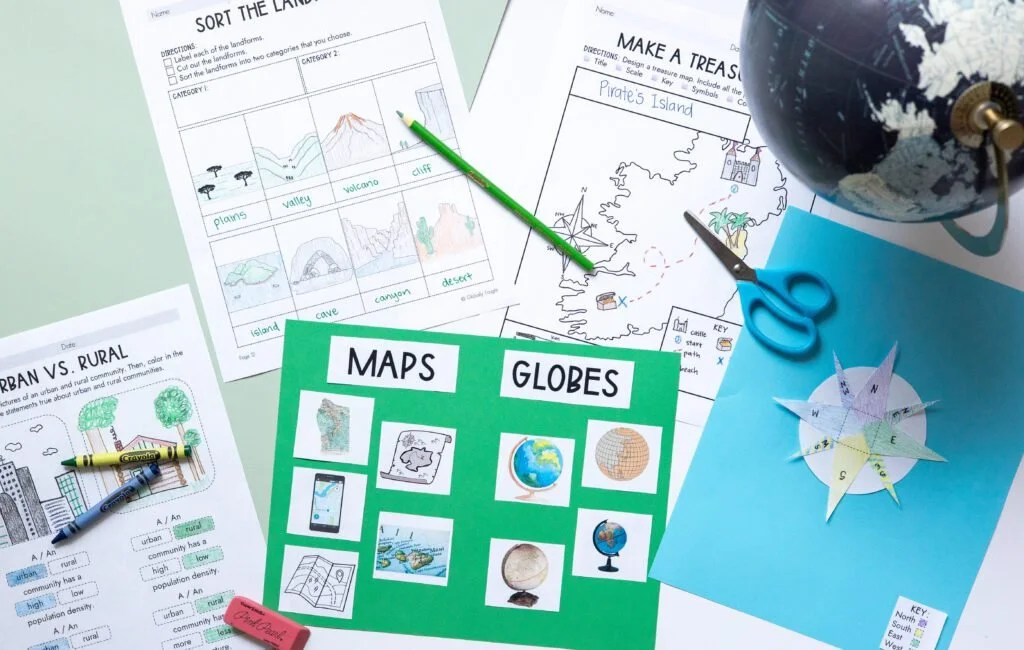
World Geography Unit by Globally Taught
Geography is the study of places, people, environments, and how they interact. In elementary school, geography lessons help students understand maps, landforms, regions, cultures, and the connections between people and the world around them.
Geography is more than just knowing your state capitals. When you teach geography well, you spark curiosity, foster global awareness, develop spatial thinking, and instill a sense of connection to cultures and people across the globe.
Here are some creative ways to introduce students to the wonderful subject of geography.
1. Explore Maps with Interactive Map Activities
Treasure Hunt:
Use Geoguessr or Google Maps to show students a location on the map. Students then get to ask questions and look for clues to figure out where they are in the world. This activity not only familiarizes kids with map reading but also encourages teamwork and problem-solving.
Build a Classroom Map:
Post a large world map and let kids mark places they’ve visited, places they’d like to visit, or where their family and friends live. This personalizes the learning experience and makes geography more relatable.
2. Explore Geography with Technology
Virtual Tours:
Leverage online geography resources to take virtual tours of famous landmarks, cities, or natural wonders around the world. Websites like Google Earth or virtual museum tours bring geography alive and make learning immersive.
Geography Games, Songs, and Puzzles:
Our World Geography Resources include dozens of unique songs, games, puzzles, and role-play activities to help students conceptualize geography. Learn the cardinal and intermediate directions with a fun song in our Compass Rose Lesson. Remember the seven continents and five oceans with puzzles in our Continents and Oceans Lesson. These games incorporate puzzles, quizzes, and interactive challenges, making learning geography enjoyable and engaging.
3. Cultural Exchanges and Pen Pals
Pen Pal Programs:
Connect your classroom with students from different regions or countries. Encourage letter writing or virtual exchanges to learn about each other's cultures, traditions, and geographical backgrounds.
Cultural Days:
Dedicate specific days to exploring different cultures. Invite guest speakers, organize food tastings, or showcase traditional clothing and artifacts. This hands-on approach sparks interest and appreciation for diversity.
4. Creative Projects to Develop Spatial Thinking
Map Making:
Task kids with creating their own maps, whether it's a map of their neighborhood, a fantasy world, or an imaginary island. This hands-on activity reinforces map reading skills and encourages creativity.
Geography Crafts for Kids:
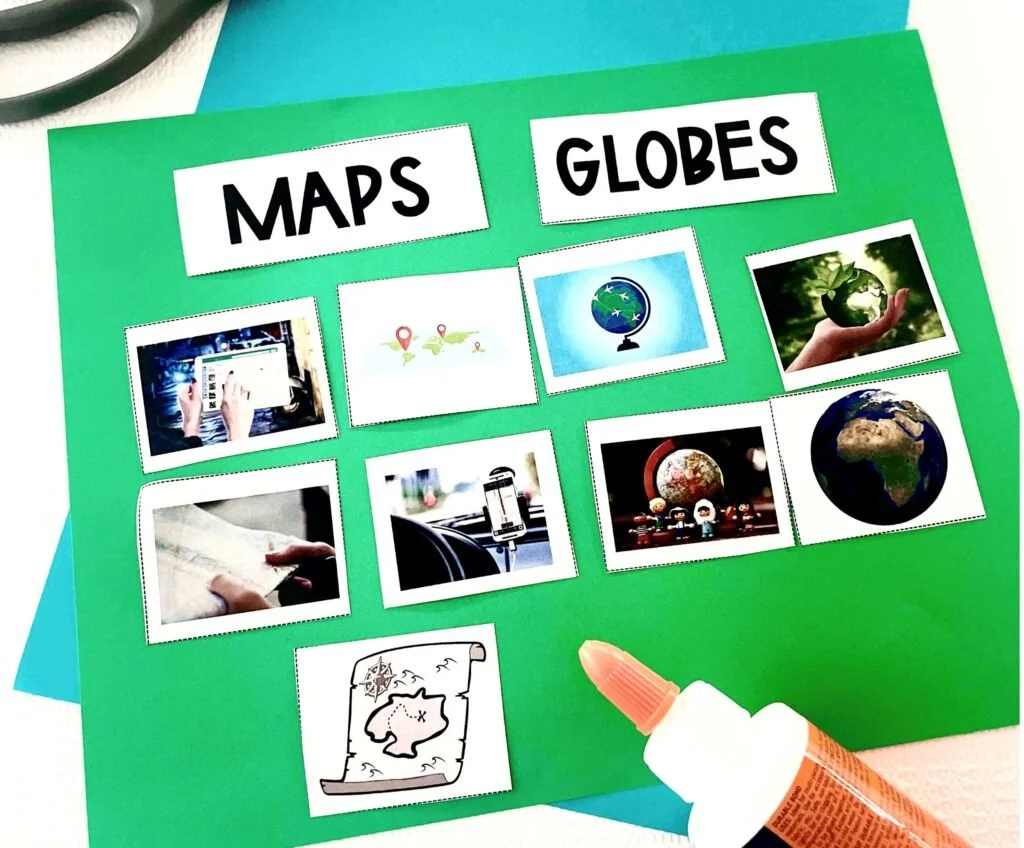
Maps and Globes Lesson by Globally Taught. This geography activity asks students to categorize images of maps and globes.
Engage in art and craft projects related to geography, such as creating flags of different countries, making globes using papier-mâché, or crafting landmarks using recyclable materials. These activities merge creativity with learning.
5. Geography for Kids with Field Trips and Outdoor Learning
Nature Walks:
Take educational field trips to parks, nature reserves, or local geographical landmarks to learn about the physical geography of your region. Observing landscapes firsthand helps children understand geographical features like mountains, rivers, and other landforms.
Map Your Community:
Create a map of important landmarks, businesses, and points of interest in your community. Not only does this help students understand their hometowns and cities better, but you also teach students to confidently navigate. When students have navigational skills and can recognize where landmarks are, they are safer.
6. Storytelling and Literature
Stories about Geography:
Read books set in different countries or regions. Encourage discussions about the settings, landscapes, and cultures portrayed in the stories, making geography for kids more engaging and relatable. The more cultures a student is exposed to, the more they can recognize their own culture.
Write Travel Journals:
Encourage kids to maintain travel journals or diaries, documenting their experiences, observations, and learnings from trips or even from virtual travels. This practice reinforces map skills and encourages reflection.
These interactive geography activities make geography for kids an exciting and accessible subject. It's not merely about learning names and locations. You want to nurture a lifelong curiosity about the world and its diverse cultures, landscapes, and people. Geography becomes a gateway to understanding and appreciating the people and places that make up our planet.