
Holiday Fun for Kids: Teach these 6 Holidays Around the World in December
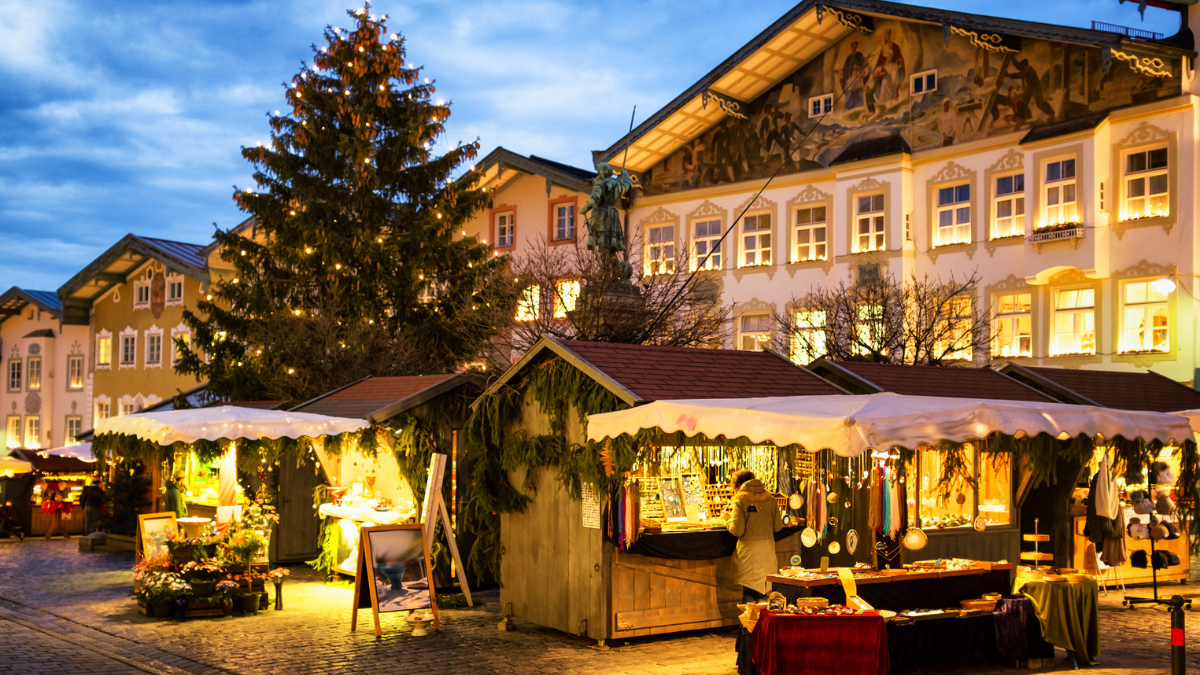
December is a month filled with holidays and celebrations that can teach a lot about the people who celebrate them. Teaching kids about these holidays around the world in December promotes cultural understanding. Holidays are fun for kids, so bringing them into your classroom is an easy way to engage students. They will have the opportunity to share their traditions, and they will learn about the traditions of their classmates as well.
Take a glimpse at some of the holidays celebrated around the world this December:
1. St. Lucia Day, December 13th
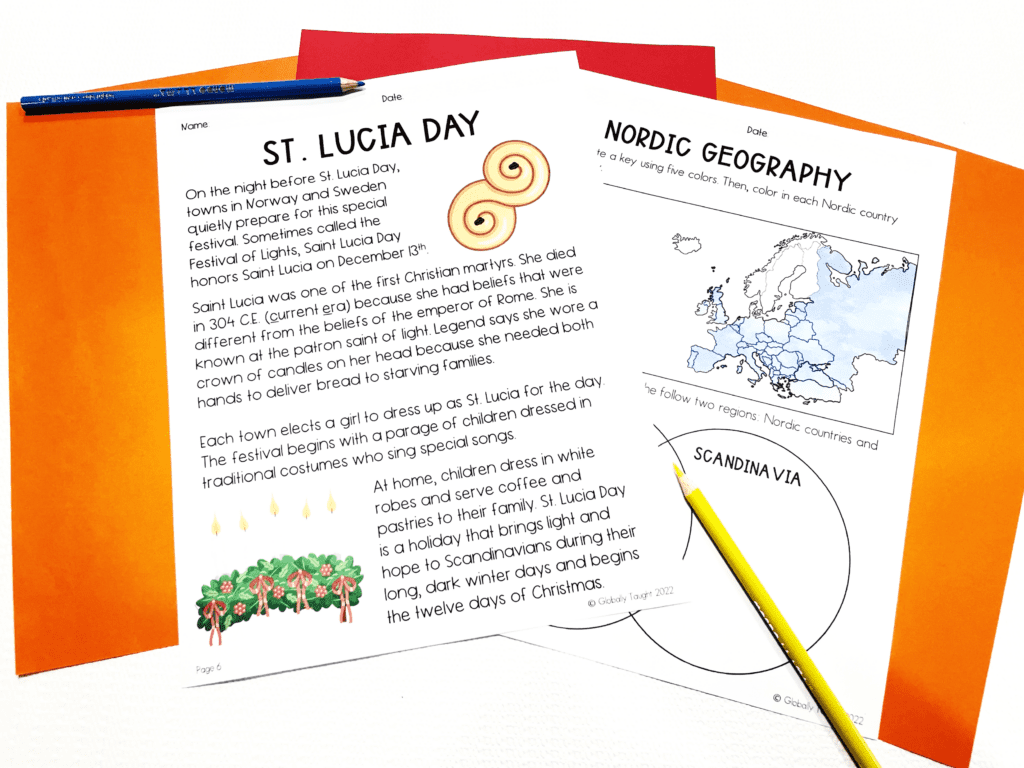
Article about St. Lucia Day and Nordic Geography Activity included in the St. Lucia Day Lesson by Globally Taught
Significance:
St. Lucia's Day is the festival of lights celebrated in Sweden, Norway, and the Swedish-speaking areas of Finland on December 13th in honor of St. Lucia.
Teaching Ideas:
Sing: Learn to sing the famous St. Lucia Day song and analyze the meaning behind the lyrics.
Bake: St. Lucia Day Saffron Buns, called Lussebullar, are a staple of the Swedish tradition of this winter solstice celebration. Test out a recipe.
2. Las Posadas,December 16-24th

Significance:
Las Posadas is a religious festival celebrated from December 16th until December 24th that commemorates the journey that Mary and Joseph took before the birth of Jesus. It is widely celebrated in Mexico and parts of Central America.
Teaching Ideas:
Break a Piñata: On Las Posadas, kids get to enjoy the fun of breaking open a piñata. You can even make the piñata as a class!
Try Typical Foods: Try traditional foods eaten on Las Posadas, like ponche navideño (punch), tamales, and buñuelos.
3. Hanukkah, date varies according to the lunar calendar
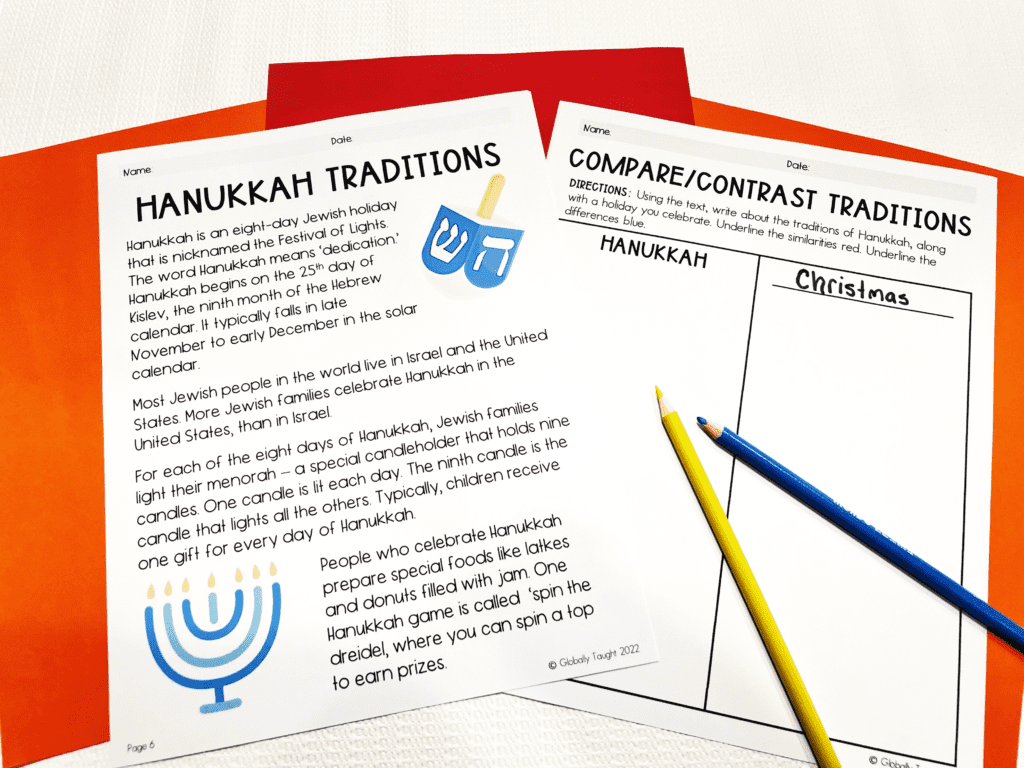
Hanukkah Traditions article and Compare/Contrast Traditions Activity included in the Hanukkah Lesson by Globally Taught
Significance:
Hanukkah, also known as the Festival of Lights, commemorates the rededication of the Holy Temple in Jerusalem. It lasts for eight days and nights, symbolized by the lighting of the menorah candles.
Teaching Ideas:
Menorah Craft: Create a menorah craft using paper or clay to represent the lighting of candles.
Dreidel Game: Introduce the traditional dreidel game to teach about Hanukkah's cultural significance and engage in a fun activity.
4. Christmas, December 25th
Significance:
Christmas celebrates the birth of Jesus Christ and is observed by billions of people around the world. Traditions include decorating Christmas trees, exchanging gifts, and attending church services.
Teaching Ideas:
Christmas Around the World: Explore how different countries celebrate Christmas through stories, music, and crafts representing diverse traditions.
Ornament Craft: Research the countries, cultures, and traditions around the world that celebrate Christmas. Then, design an ornament with this information. Adorn a classroom tree with the ornaments that students create.
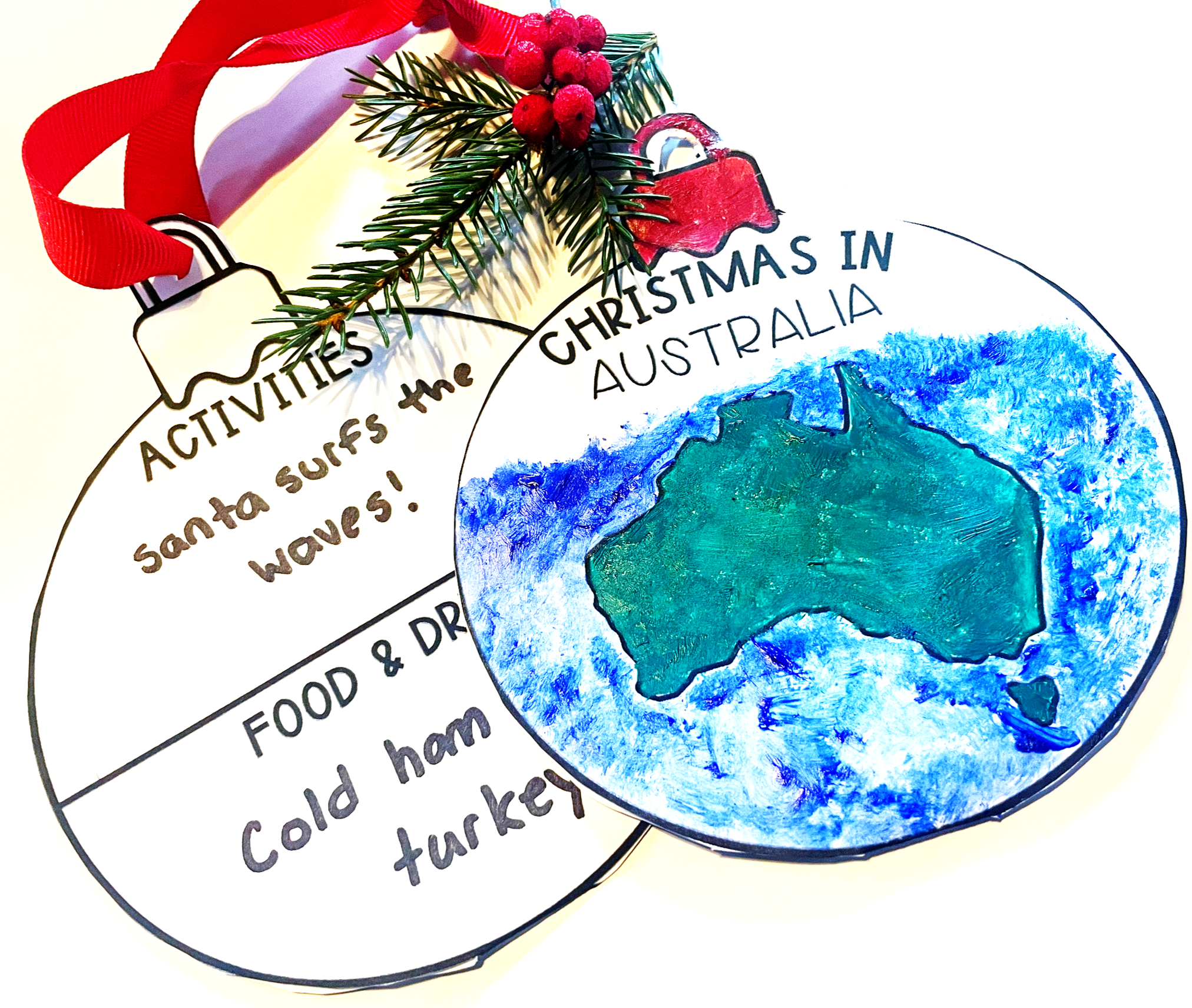
Ornament Craft - Christmas Around the World Research Project by Globally Taught
5. Kwanzaa, December 26th - January 1st
Significance:
Kwanzaa, a week-long celebration, honors African heritage, unity, and culture. It highlights seven principles (Nguzo Saba) such as unity, self-determination, and collective work and responsibility.
Teaching Ideas:
Kwanzaa Symbols: Teach about the principles of Kwanzaa with a craft. Make a kinara (candle holder) or weave a mkeka (mat) out of construction paper.
Community Building: Organize activities that build community with a team-building challenge. Emphasize the principles of unity and collective responsibility in your classroom.
6. Diwali, date varies according to the lunar calendar
Significance:
Diwali, the Festival of Lights, is an important Hindu festival symbolizing the victory of light over darkness and good over evil. It involves lighting oil lamps, fireworks, and sharing sweets.
Teaching Ideas:
Rangoli Craft: Engage children in creating colorful rangoli patterns using colored sand or rice flour.
Storytelling: Share age-appropriate stories about Diwali's origins and its cultural significance.
Tips for Teaching Holidays Around the World in December
1. Multisensory Experience
Holidays are sensory experiences, from the taste of the food to the sights of the decorations to the sounds of the music. Explore holidays around the world in December with the senses. Use crafts, foods, music, and stories to bring each celebration alive.
2. Pick and Choose
Make a varied selection of holidays that you want to teach about in December, but don't stress about covering all the major world holidays. You can always introduce a new holiday later in the year.
3. Share Traditions
Invite community members, students, or parents to share their experiences and traditions related to the holidays they celebrate. Have students prepare questions to ask in advance.
4. Compare and Contrast
Progress on your Common Core standards while learning about holidays around the world. Practice skills like comparing and contrasting to make social studies even more productive.
Incorporating holidays from around the world in December into your social studies block is a highly engaging way to end the term. Kids will enjoy the multisensory experience of exploring holidays around the world in December. They will develop their cultural identity as they reflect and share their family traditions.
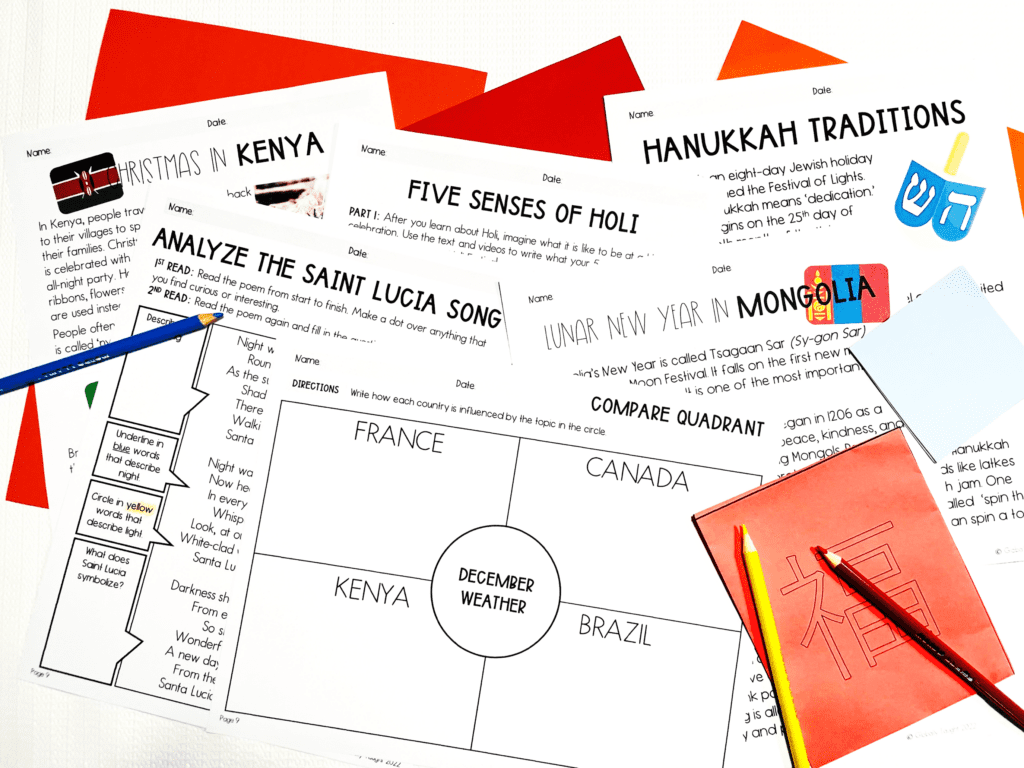
Holidays Around the World Unit which includes 5 holidays around the world in December, plus 10 other holiday lessons. Image shows activities included in the unit.
Explore our full Holidays Around the World Unit here.