
See Think Wonder: A Simple Strategy to Build Curious Thinkers
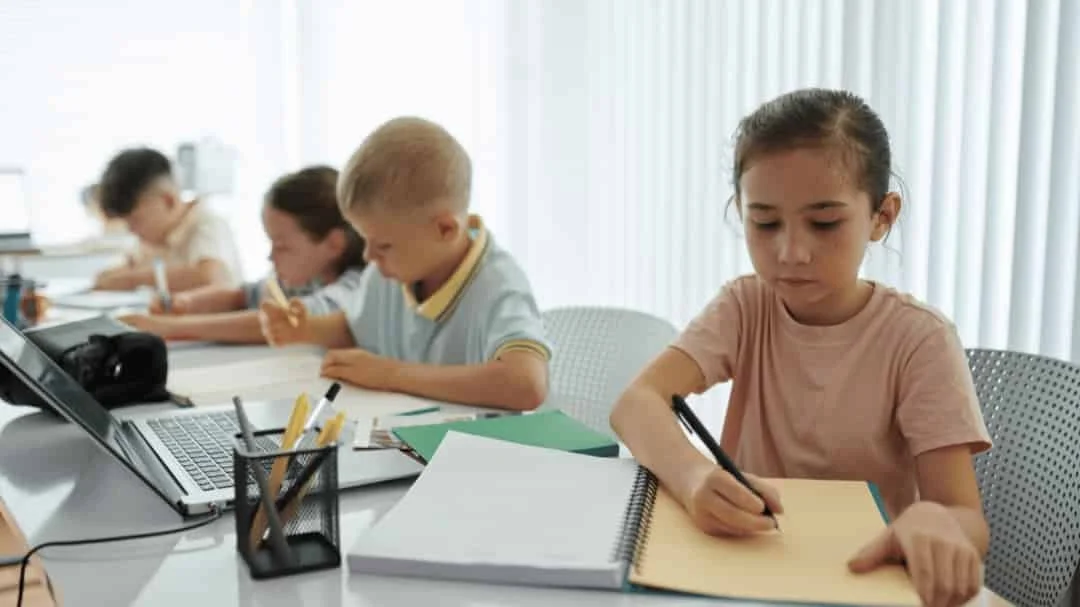
One of the most powerful skills students can develop is curiosity.
When students learn to observe closely, think critically, and ask thoughtful questions, they move beyond memorizing facts and begin thinking like social scientists and future citizens.
A simple tool, part of Harvard's Project Zero Visible Thinking Routines, called See-Think-Wonder helps build these skills in just a few minutes.
Originally developed through research on thinking routines in education, this strategy encourages students to slow down, examine information carefully, and ask meaningful questions about what they observe.
The best part? It works with any subject, grade level, or lesson.
What is the See Think Wonder Strategy?
The routine follows three simple prompts:
See: What do you notice?
Think: What do you think is happening?
Wonder: What questions do you have?
Students begin with observation, move into interpretation, and finish with curiosity-driven questions. This sequence helps students separate what they observe from what they assume, which strengthens critical thinking.
Teachers often use this routine when introducing a new topic or analyzing images, artifacts, charts, or historical sources.
Step 1: See (Observe Carefully)
Start by asking students to simply observe.
No guessing.
No interpreting yet.
Just noticing.
Students might say things like:
“I see a river running through the city.”
“I see people wearing heavy coats.”
“I see mountains in the background.”
This step helps students slow down and pay attention to details.
Observation is an essential skill for subjects like geography and history, where small details often reveal important clues.
Step 2: Think (Interpret the Evidence)
Next, students move from observation to interpretation.
Ask:
“What do you think is happening?”
Students now connect their observations with background knowledge.
See-Think-Wonder examples might include:
“I think this city might be in a cold climate.”
“I think the people might be traveling by boat because there are canals.”
“I think this picture might show a busy trade port.”
Encourage students to explain their thinking with evidence.
A helpful follow-up question is:
“What do you see that makes you say that?”
This pushes students to support their ideas with observable details.
Step 3: Wonder (Ask Questions)
The final step is often the most powerful.
Ask students:
“What does this make you wonder?”
Students might ask:
“I wonder why the houses are built so close together.”
“I wonder what country this city is in.”
“I wonder how people travel around here.”
These questions can become the starting point for research, discussion, or future lessons.
Curiosity drives deeper learning.
Why Teachers Love This Routine
The See, Think, Wonder strategy works because it builds multiple skills at once.
Students practice:
careful observation
evidence-based reasoning
curiosity and questioning
discussion and collaboration
It also gives every student a way to participate, even if they are unsure about the correct answer.
There are no wrong observations, so long as students explain their reasoning.
How to Use It in a Geography Lesson
This routine works especially well in world geography lessons.
Try showing students:
a satellite image of a landscape
a photograph of a city
a map or climate chart
a cultural artifact or historical photo
For example, if students observe a photo of the Sahara Desert, they might say:
See: I see sand dunes and very few plants.
Think: I think it is very hot and dry there.
Wonder: I wonder how people survive in such a hot place.
From there, you can transition into lessons about climate, culture, and geography.
Tips for Classroom Success
A few simple strategies make this routine even more effective:
Give students quiet observation time.
Let them look carefully before discussing.Record responses publicly.
Write See / Think / Wonder on the board, or use our free downloadable handout below.Encourage multiple perspectives.
Students may interpret the same image differently.Return to the chart later.
At the end of a unit, revisit student questions and see which ones were answered.
Helping Students Become Curious Learners
When students regularly practice See-Think-Wonder, they begin approaching the world differently.
They slow down.
They look more closely.
They ask better questions.
And those habits create stronger thinkers across every subject.
Try It With Your Students
Download our free See Think Wonder handout:
Looking for ready-to-use geography activities that build observation and inquiry skills?
Explore our world geography units, inquiry lessons, and printable activities at Globally Taught to help students think like real geographers.
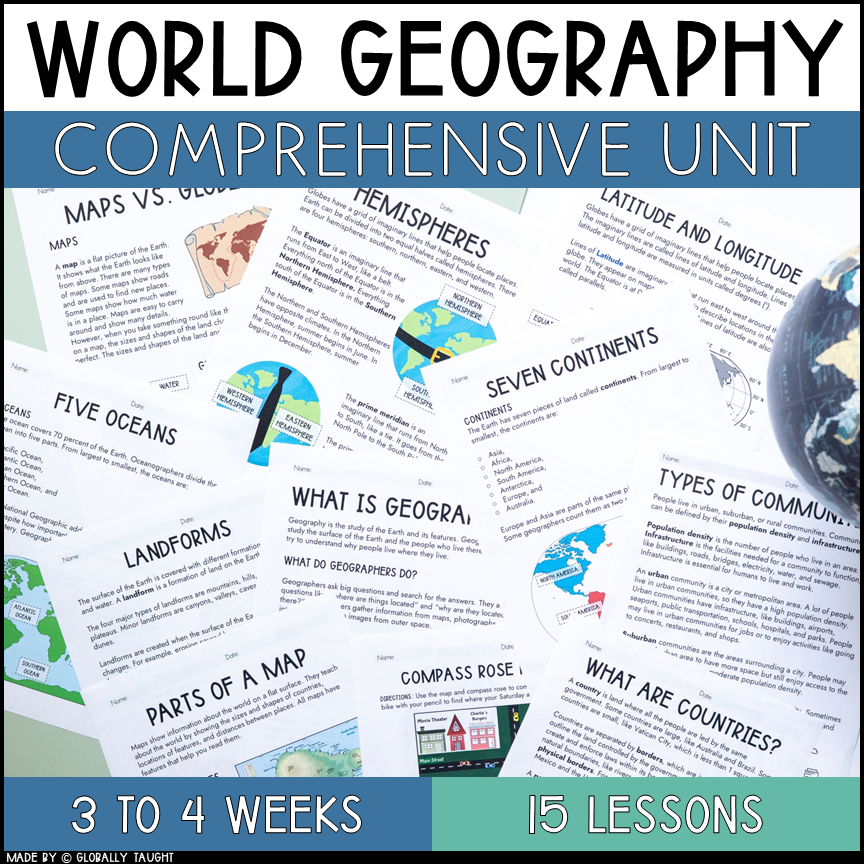
Teach 3–4 weeks of upper elementary geography with 15 ready-to-teach lessons covering maps, directions, hemispheres, latitude and longitude, continents and oceans, landforms, bodies of water, communities, regions, and more.
With 400+ pages of lesson plans, reading passages, activities, projects, games, and assessments, the planning is done for you.