
The Ultimate Guide to Teaching Government to Kids
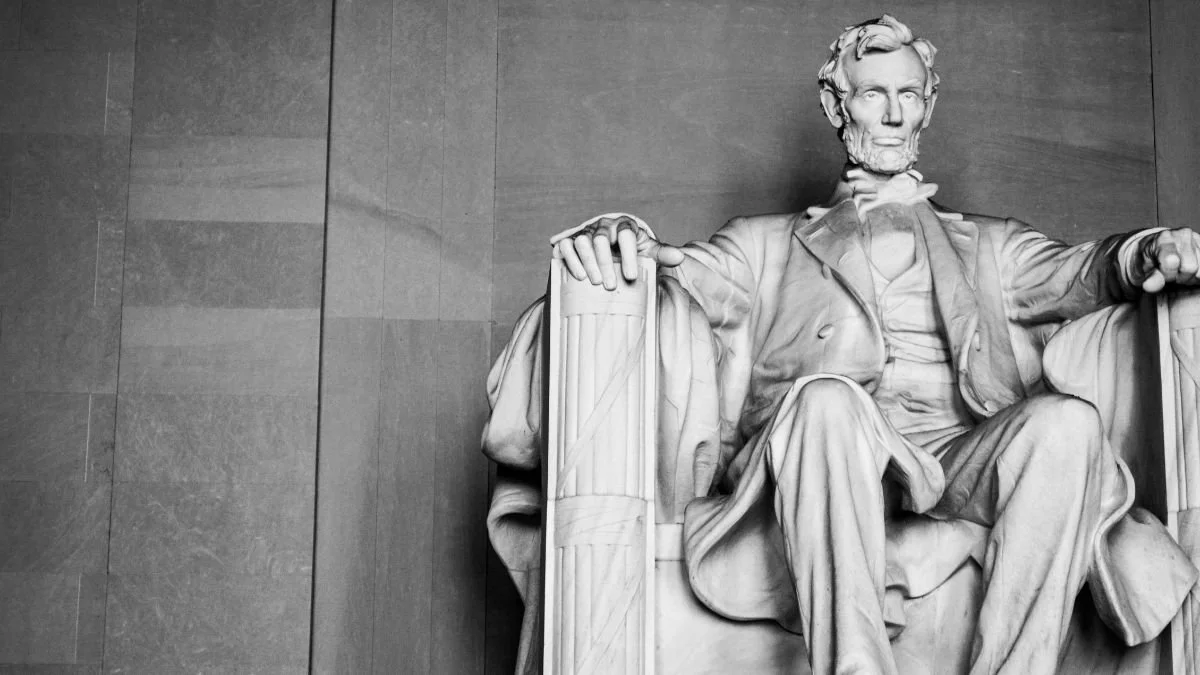
Teaching Government to Kids
Many teachers avoid teaching about government because it can feel like a sensitive or politically charged subject. You may worry that diving into civics will devolve into discussions about controversial topics and lead to discomfort in the classroom. You may also dislike teaching about government because you were taught using dry material that was difficult to relate to.
Fortunately, there is a better way to teach about government. Government and civics education are critical for raising informed, active citizens who understand their rights, responsibilities, and how the political system functions. In this ultimate government guide, you will explore our curated list of resources that will help your students critically engage with important societal issues and develop essential twenty-first century skills, like critical thinking, discussion and debate, and civic participation.
While government can be a complex topic, it also provides a platform for students to learn how their voices and actions can influence change and how government policies impact their lives. For many teachers, this process is rewarding as it empowers students to become engaged and informed members of society.
In this guide, we'll help you understand how to teach topics that are appropriate for elementary school students and how to remain neutral while still providing accurate, balanced information that will help students navigate today's complicated political landscape.
Click on any of the links below to explore a specific area of this Government Guide for Kids.
Teaching Government to Kids Overview
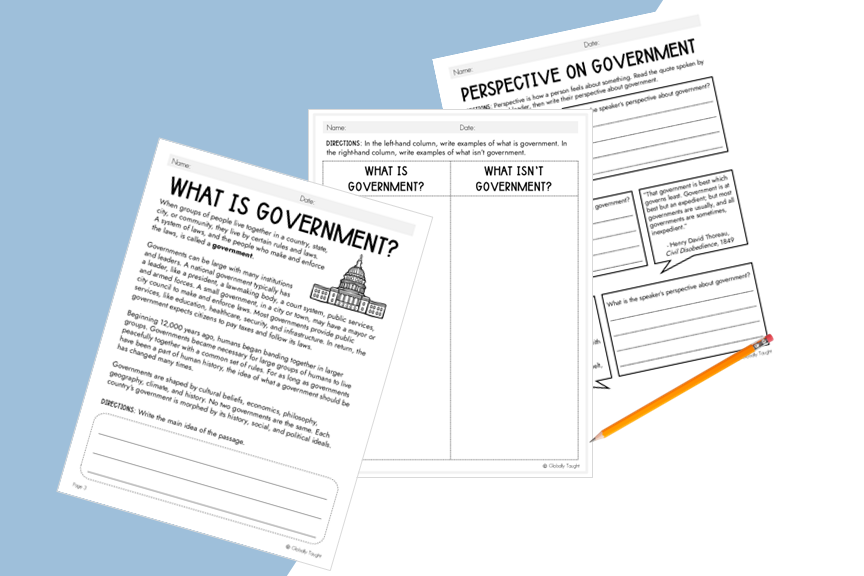
Sampling of Globally Taught’s Government Unit
Government Pacing Guide
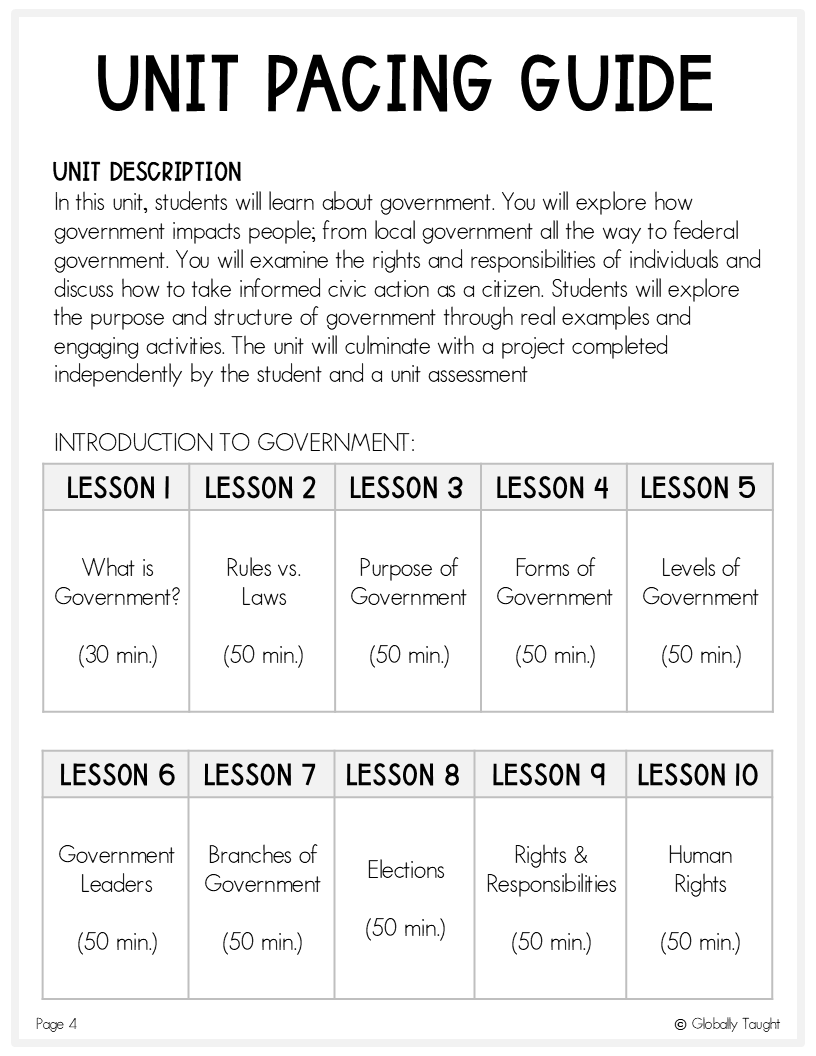
Globally Taught’s Government Unit Pacing Guide
This is the same pacing guide as the one found in our Government Unit.
This skill-based unit is perfect for teachers who want to help their students build twenty-first century skills and prepare them to participate as citizens in their communities.
Included in this unit are ten lessons with step-by-step lesson plans, engaging activities, slideshows, discussions, and assessments to measure your students' progress.
Government Skills for Kids
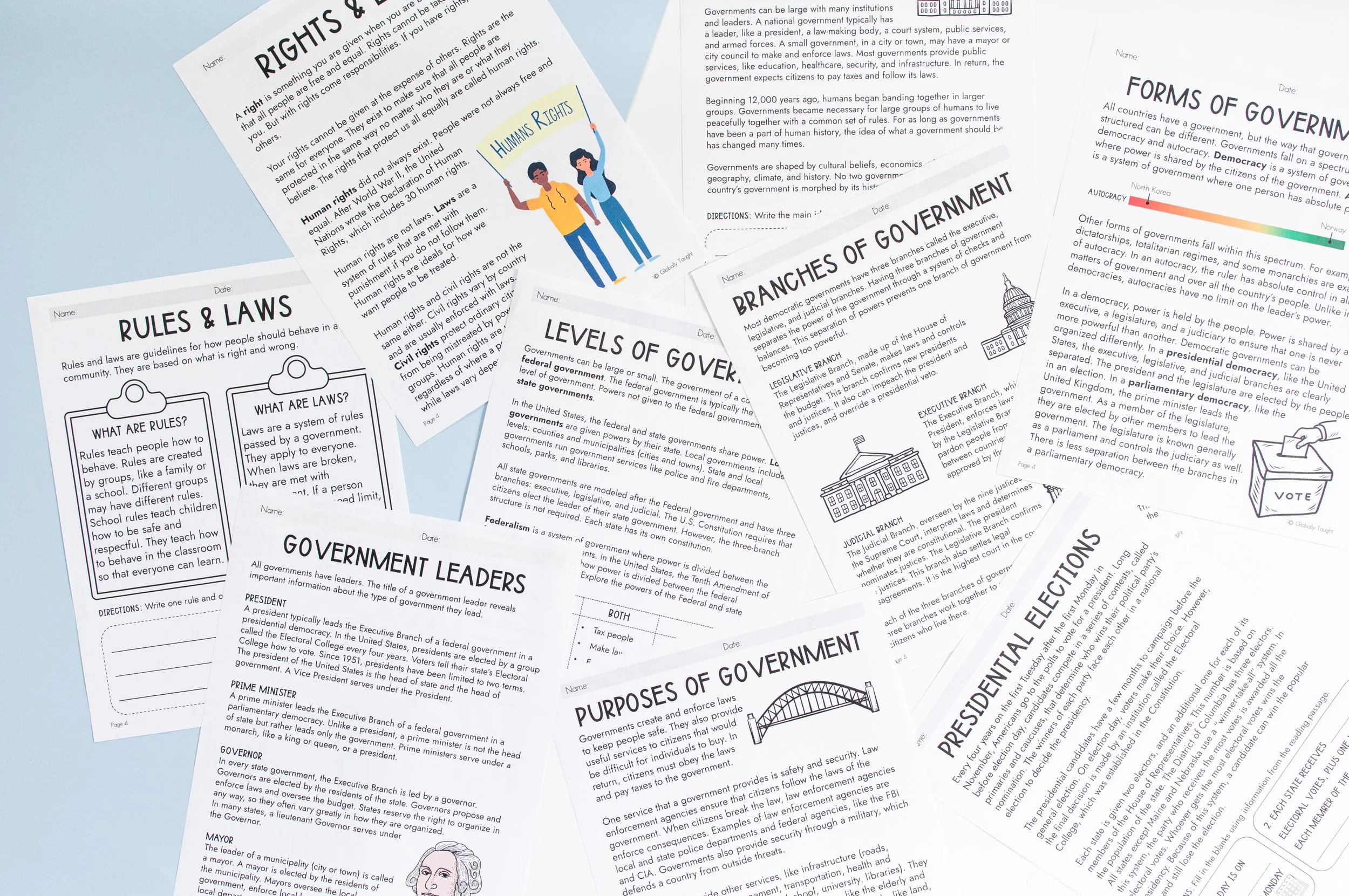
Sample Reading Passages from Globally Taught’s Government Unit for Kids
Teaching government to kids is not just about checking certain topics of the list. Learning government also means practicing a set of skills that will help students throughout their lives.
In a comprehensive government unit, students will learn skills like:
Respectful discussion and active listening, where students practice active listening skills and learn how to respectfully disagree and build upon the ideas of their peers during a discussion.
Analytical skills, where students practice the ability to read and analyze ideas about how government should work and how it should help its citizens.
Critical thinking, where students review and address a variety of twenty-first century challenges like what an effective government does, how governments respond to the needs of citizens, and what powers the government has.
Research skills, where students can independently research a government topic, find relevant and quality sources, and evaluate their findings.
Information literacy, where students can identify high-quality versus low-quality information, fact-check information they find, and evaluate evidence.
How to Make Government Relevant to Kids
Relate Government to Their Lives: Connect government decisions to issues kids care about, like school policies, community services, or environmental protection.
Interactive Learning: Use simulations, mock elections, or model governments to help kids actively engage with the process and understand how decisions are made.
Civic Role Models: Introduce kids to inspiring figures in politics, such as local leaders, activists, or historical figures, to show them how individuals can make a difference.
Hands-On Projects: Encourage kids to create campaigns, write letters to local officials, or research current events.
Use Technology: Leverage apps, websites, and games that explain government processes in an interactive and engaging way.
Discuss Issues That Matter to Them: Engage in conversations about topics that affect young people directly, like school funding, voting rights, or social justice.
Field Trips: Take students to local government offices, city council meetings, or historical landmarks to experience government in action.
Encourage Critical Thinking: Foster discussions that allow kids to analyze different viewpoints, helping them understand how decisions are made and how they can participate in debates about policies.
Government Resources for Teachers
Explore our blogposts with helpful tips and free resources for teaching kids about government.
Free Government Lesson Plan
Are you looking for a way to introduce government to your students? Your students likely know something about politics, but they may know little to nothing about government—and there is a difference between the two! In our free What is Government lesson plan, students will
define government and explain how and why governments formed
analyze quotes about government from past leaders and thinkers
identify examples of what is and isn't government
Enter your name and email in the form above to receive this lesson for free.
Government Videos for Kids
A great way to engage students when teaching about world geography is through videos. Videos can be a great way to explain challenging concepts, especially for something like latitude and longitude where a visual explanation is important. Videos can also help students remember information through catchy songs and beats.
Explore some of our favorite channels for teaching about world geography.
Teacher Tip: Use safeshare.tv to share videos without ads or distractions!
Government Games for Kids
Games are a great way to engage students when teaching about government. Use games to help kids actively engage with the process and understand how decisions are made.
iCivics provides educational online games to promote civics education and encourage students to become active citizens through role play and simulations. In this Neighborhood Good game, students identify a problem in the community and work to find a solution. In this Uncovering Loyalties game, students will explore the perspectives of different people during the American Revolutionary War.
Comprehensive Government Unit
If you want to skip the work that goes into developing your own government unit, explore our comprehensive Government Unit for upper-elementary students.
This unit will help you feel prepared and excited when teaching about government by providing you with 10 detailed lessons with more than 200 pages of activities, reading passages, slideshows, and projects.
This unit will save you dozens of hours of time! Instead of patching together resources, this unit will provide you with consistent lessons that students will love. Keep reading to learn more about what's included in our 200-page unit.
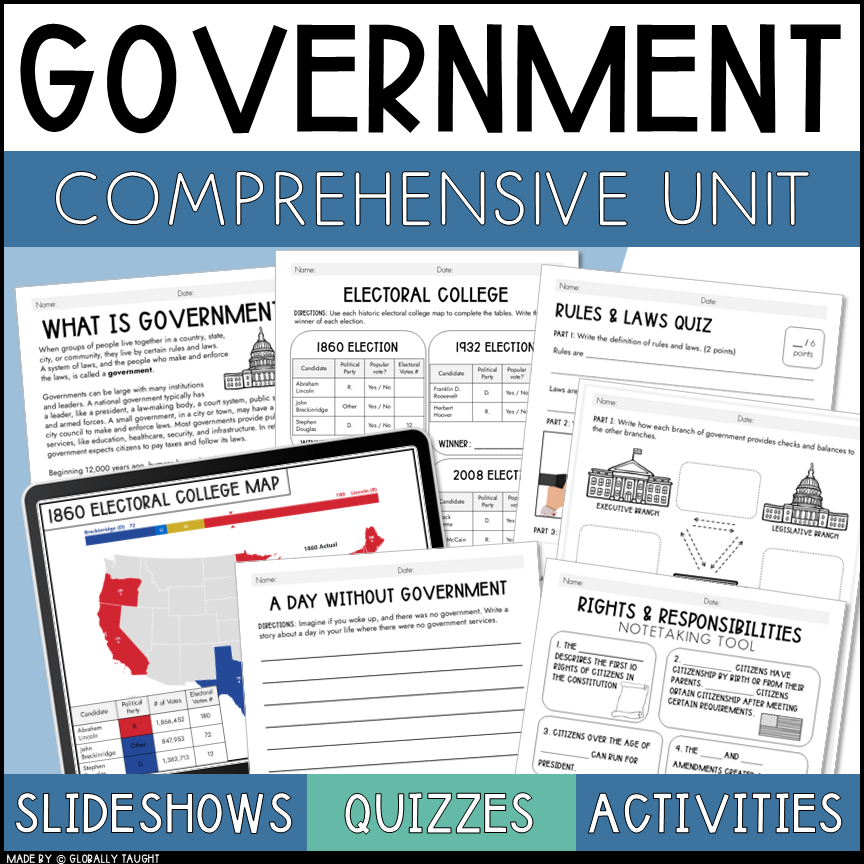
Teach 2–3 weeks of upper elementary government with 10 ready-to-teach lessons covering the purpose of government, rules and laws, forms and levels of government, government leaders, the three branches, elections, rights and responsibilities, and human rights.
With 128 pages of lessons, reading passages, activities, writing assignments, assessments, and 77 teaching slides, everything you need to introduce government and civics is in one place. Simply print, present, and teach.
Comprehensive Government Unit for Upper Elementary Students
Dive into government with this highly-engaging Government Unit for kids. This unit includes everything you need to help you save time and skyrocket engagement during social studies.
This bundle includes 10 lessons and over 200 pages of activities, projects, government worksheets, games, and slideshows to learn about government.
Unit Details:
✦ A 2-week-long comprehensive elementary government unit
✦ 200 pages of lessons, reading passages, teaching slides, government worksheets, and more!
✦ 1 ZIP file organized into 10 lessons by topic
You'll Receive:
10 Step-by-Step Lesson Plans
8 Slideshows with Discussion Questions in the Slide Notes
9 Engaging Reading Passages
Learning Objectives, Inquiry Questions, and Materials Lists
9 Writing Activities with Rubrics (Narrative, Opinion, and Informative)
25 Engaging Government Worksheets & Activities
9 Easy-to-Grade Quizzes, plus a Unit Assessment
Answer Keys and Student Samples
Exclusive Unit Bonuses: Scope & Sequence, Unit Overview and Standards Alignment, and Unit Assessment
Geography Lessons Included:
Lesson 1: What is Government
Lesson 2: Rules vs. Laws
Lesson 3: Purpose of Government
Lesson 4: Forms of Government
Lesson 5: Levels of Government (Federal, State, Local)
Lesson 6: Government Leaders
Lesson 7: Three Branches of Government
Lesson 8: Presidential Elections
Lesson 9: Rights & Responsibilities
Lesson 10: Human Rights
Unit Bonus: Government Unit Assessment
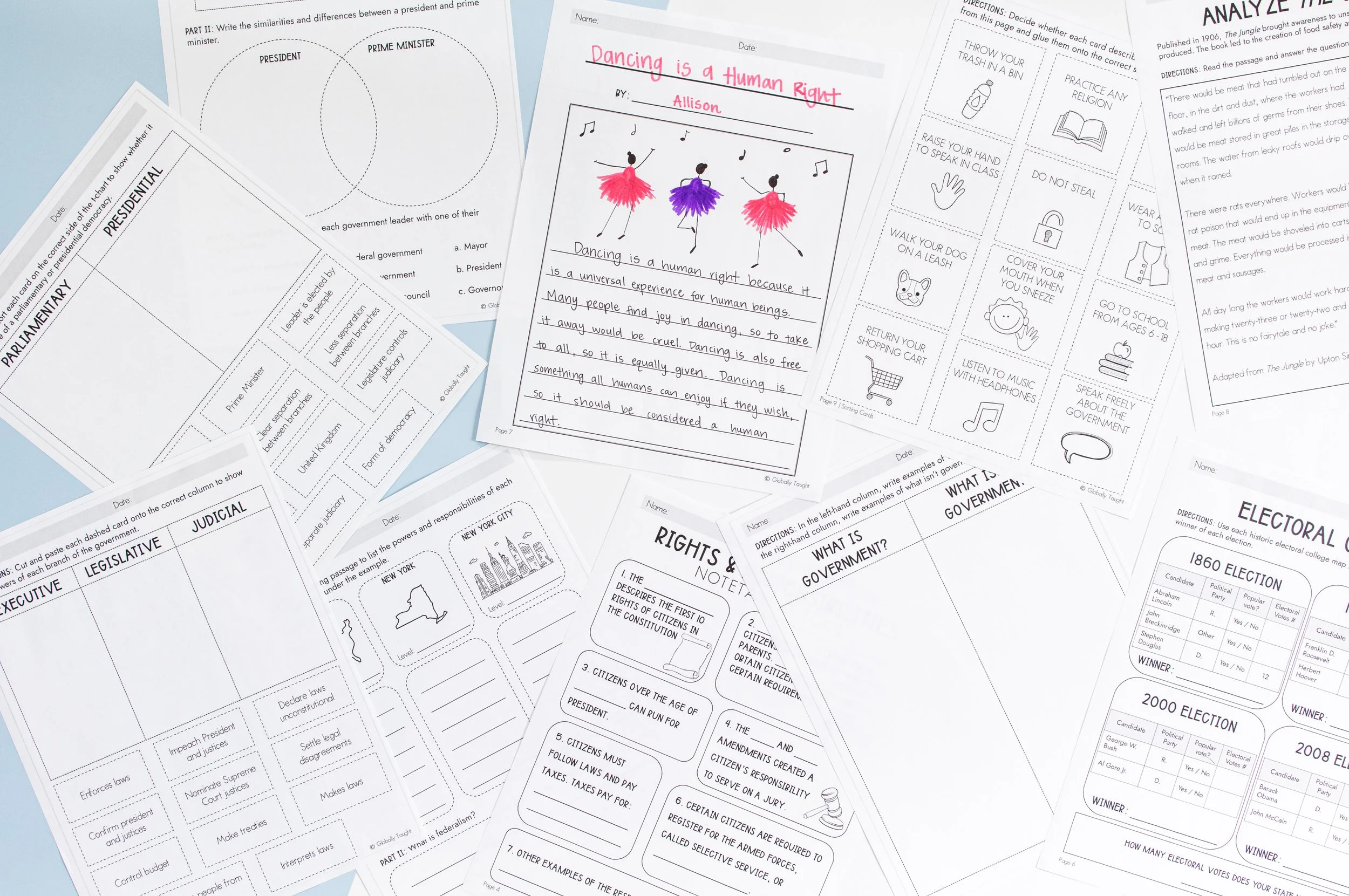
Sample Activities from Globally Taught’s Government Unit for Kids