 Image 1 of 4
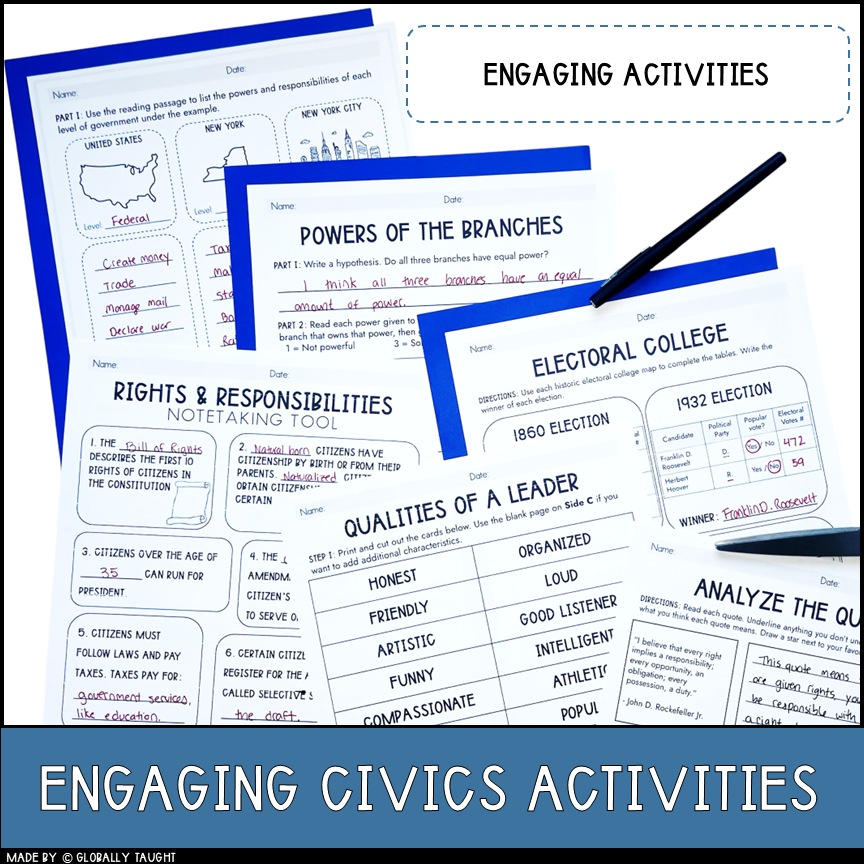 Image 2 of 4
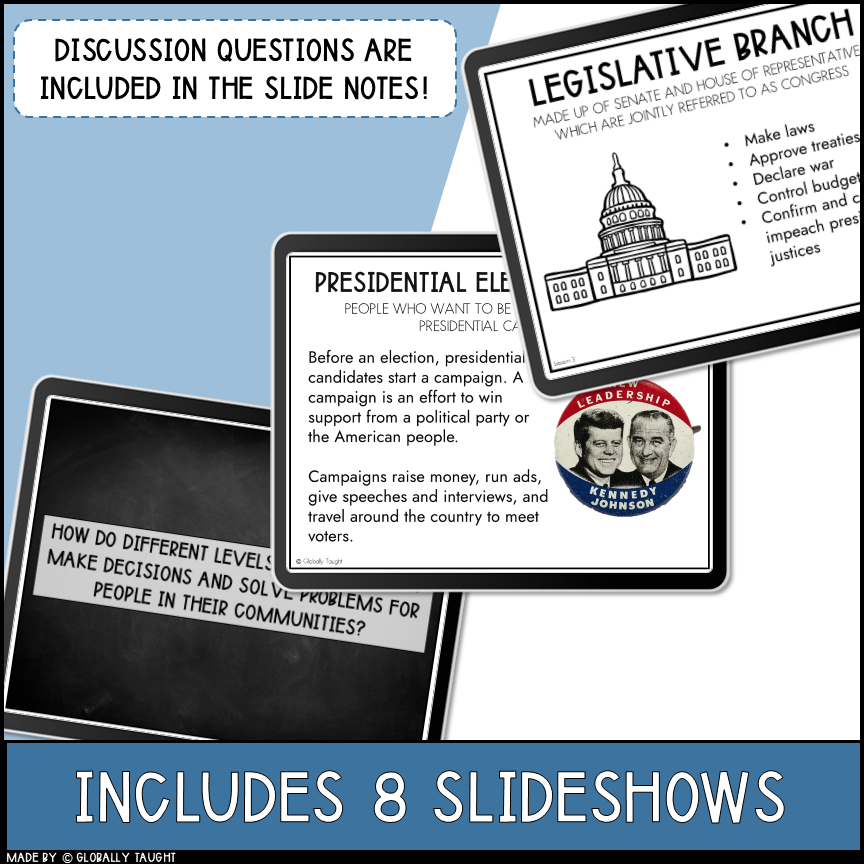 Image 3 of 4
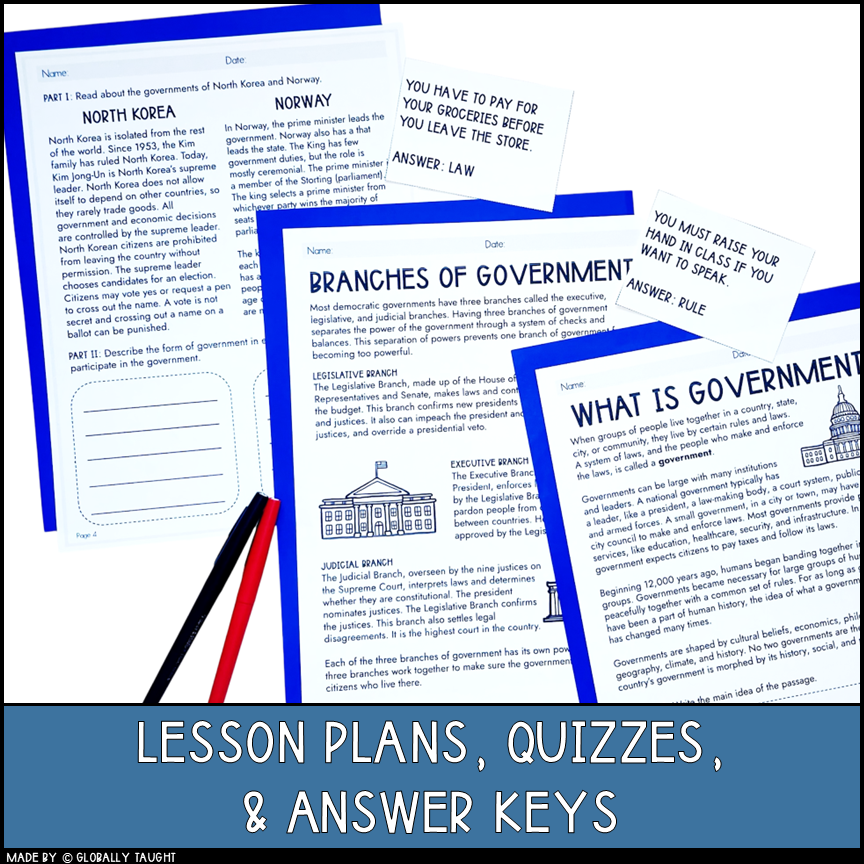 Image 4 of 4
Government Unit for 3rd–5th Grade | 10 Introduction to Government Lessons

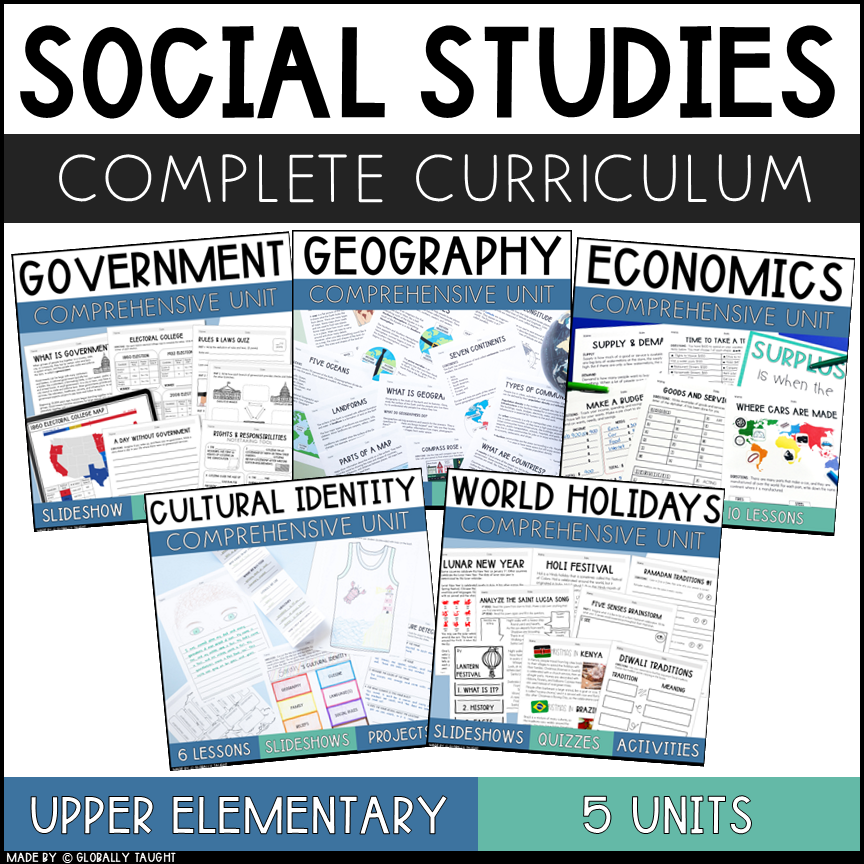
Stop Piecing Together Your Government Unit
Are you not sure where to start with government?
Maybe you're wondering:
→ What government topics should elementary students learn?
→ How do I teach civics without getting too political?
→ How do I explain government in a way kids will actually understand?
→ How do I handle discussions about elections and leadership?
→ How do I teach students to think critically while keeping the lessons age-appropriate?
The planning is done for you.
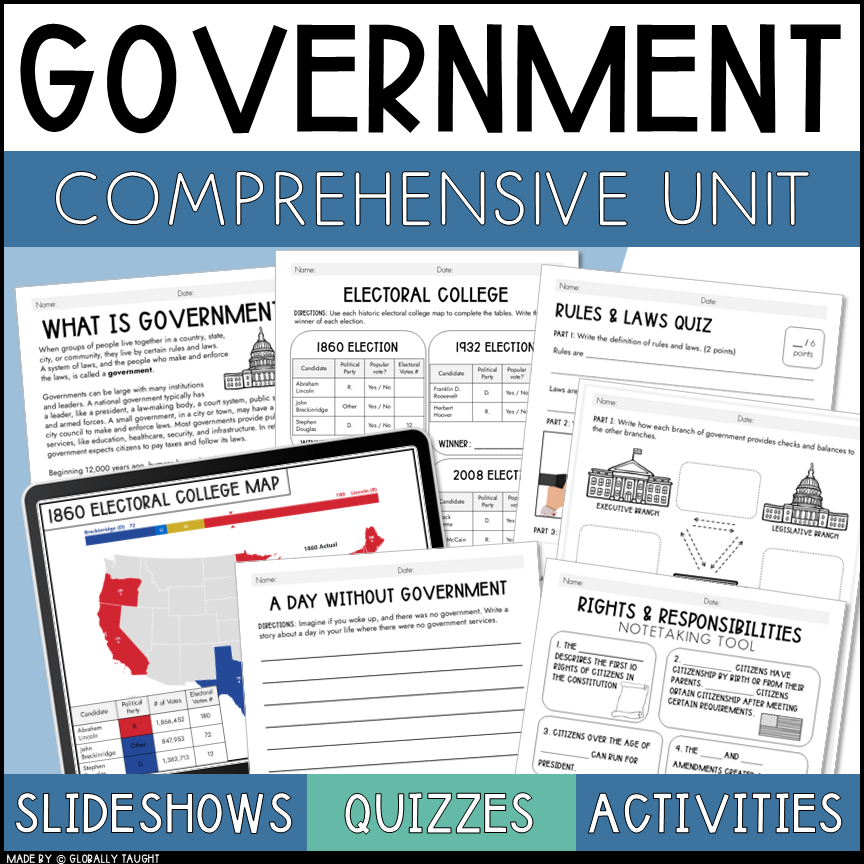
This complete government unit gives you a structured sequence for teaching foundational civics concepts through reading, discussion, writing, activities, teaching slides, and real-world examples.
The focus is on helping students understand how government works and how people participate in their communities.
Unit Details:
A two to three week comprehensive elementary government unit
200 pages of lessons, reading passages, teaching slides, government worksheets, and more
1 ZIP file organized into 10 lessons by topic
You’ll Receive:
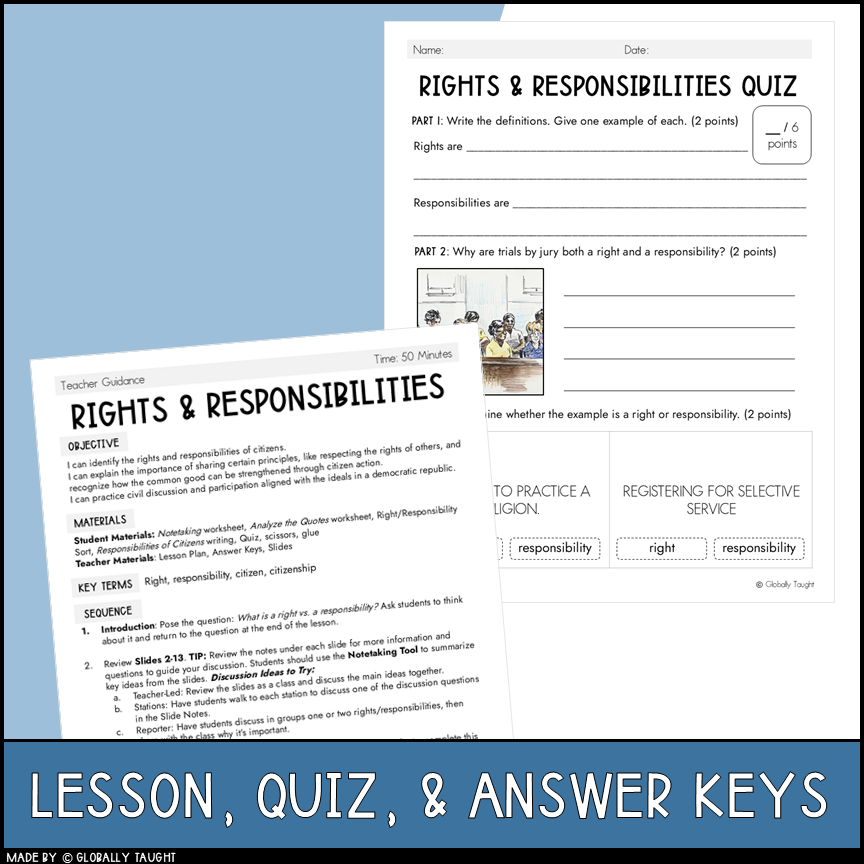
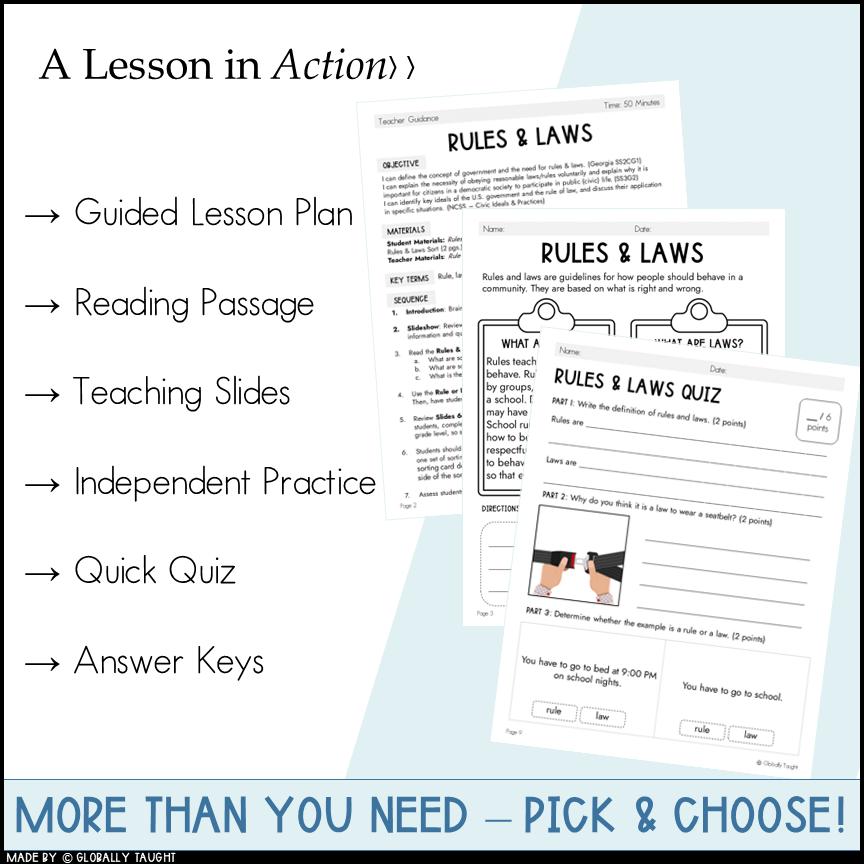
10 Step-by-Step Lesson Plans
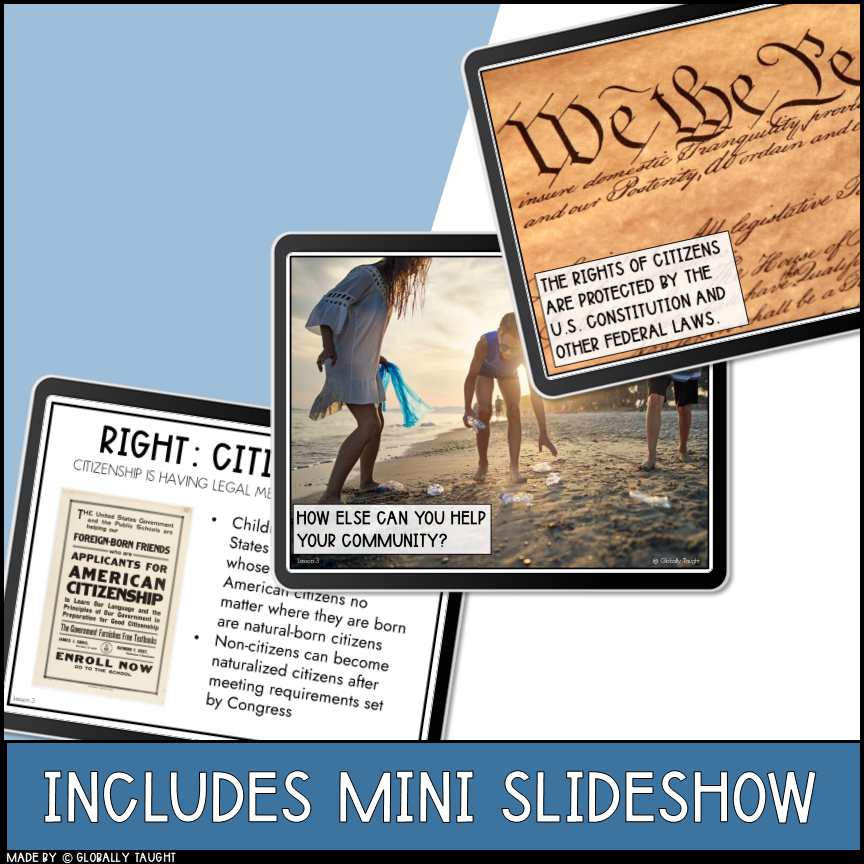
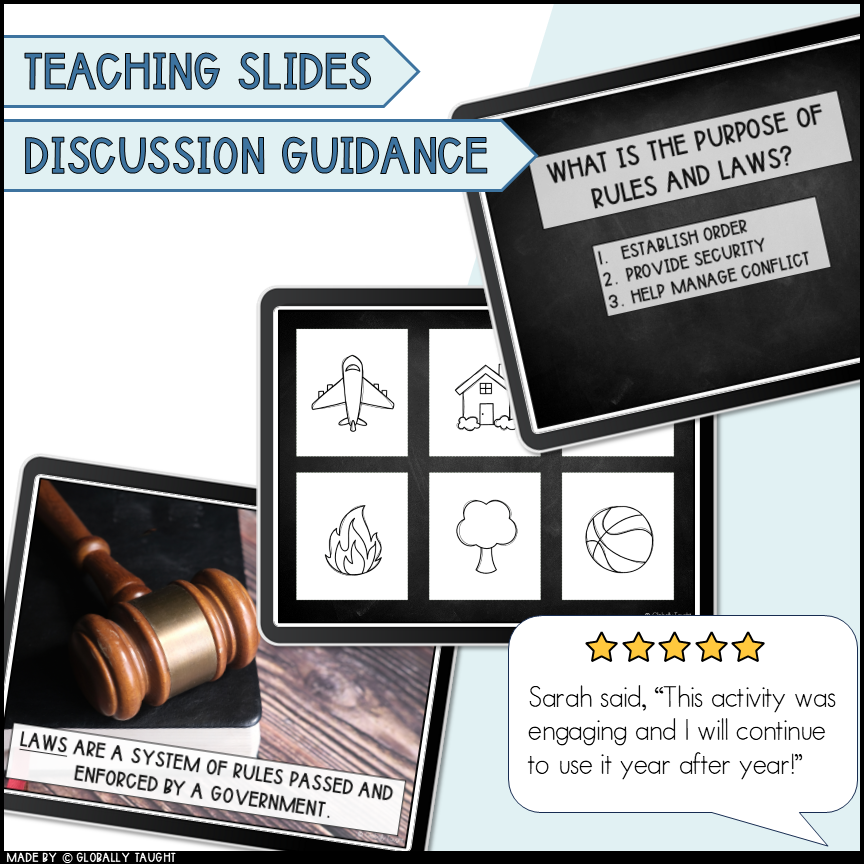
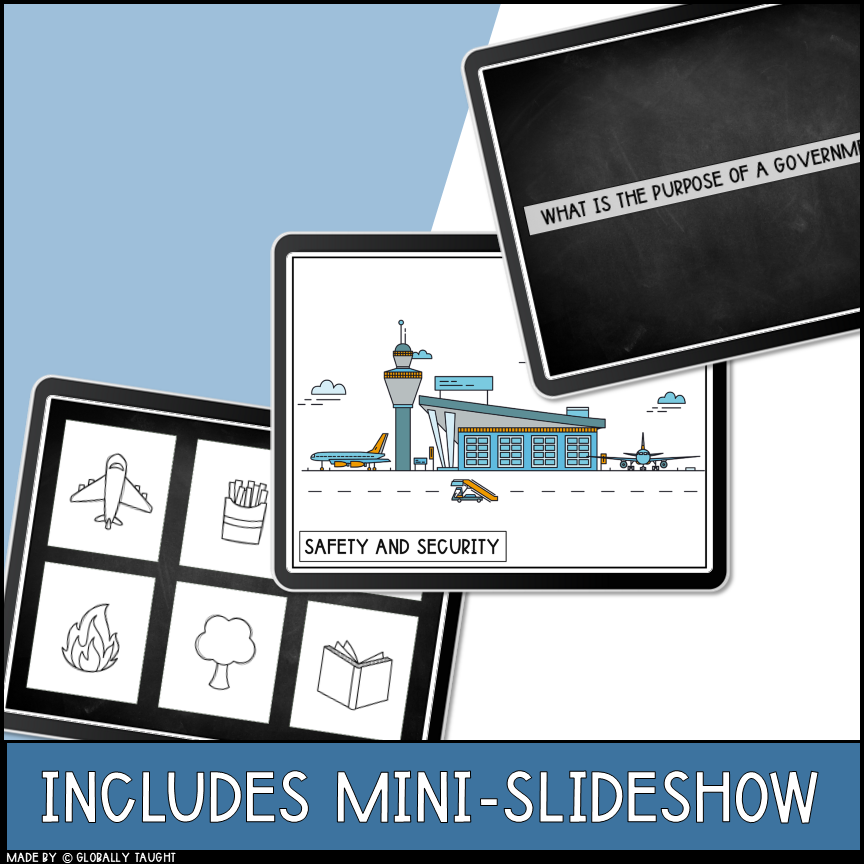
8 Slideshows with Discussion Questions in the Slide Notes
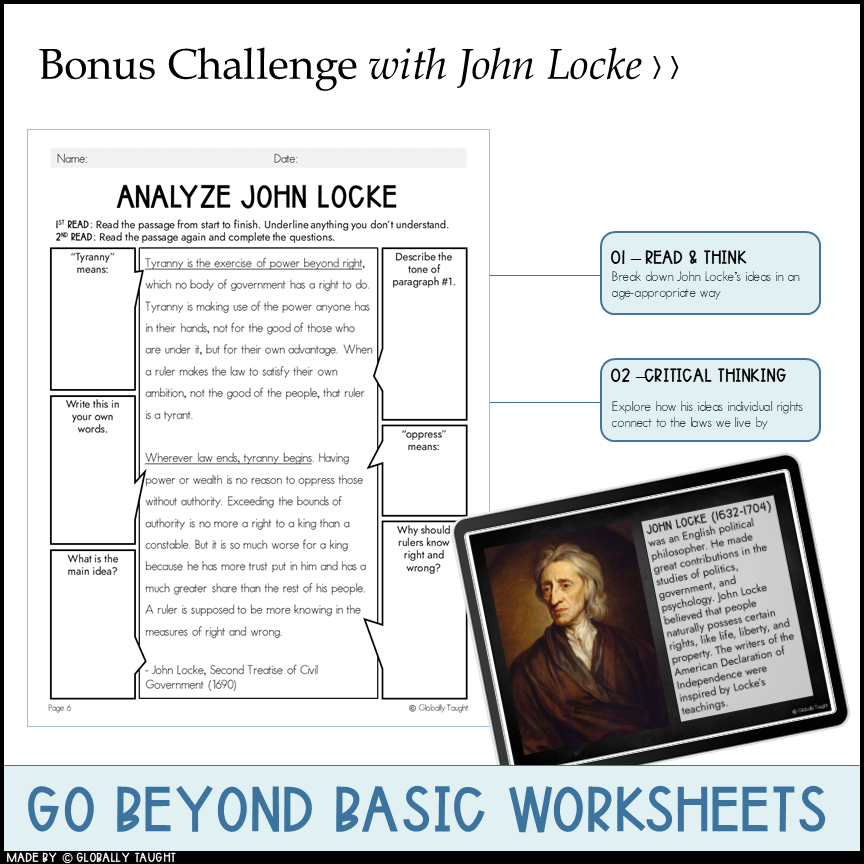
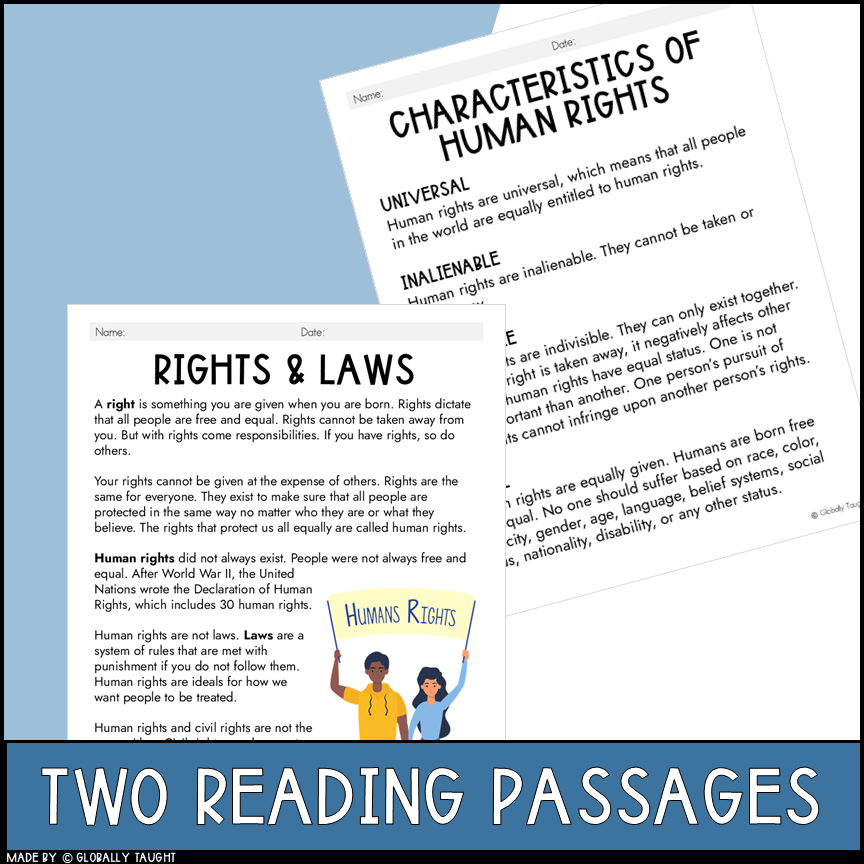
9 Engaging Reading Passages
Learning Objectives, Inquiry Questions, and Materials Lists
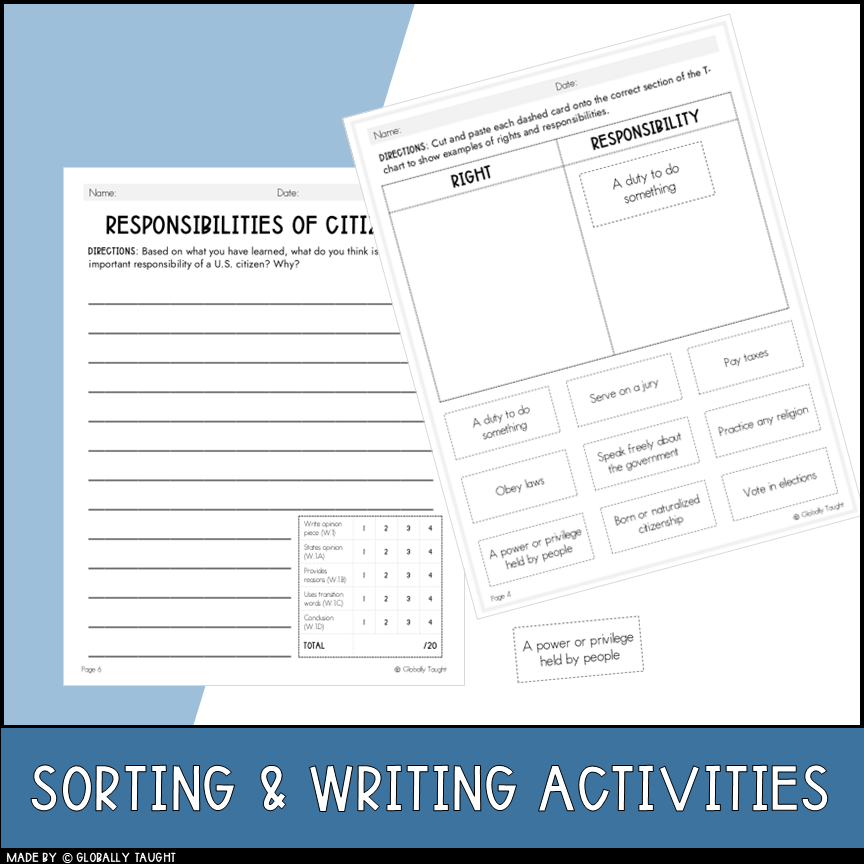
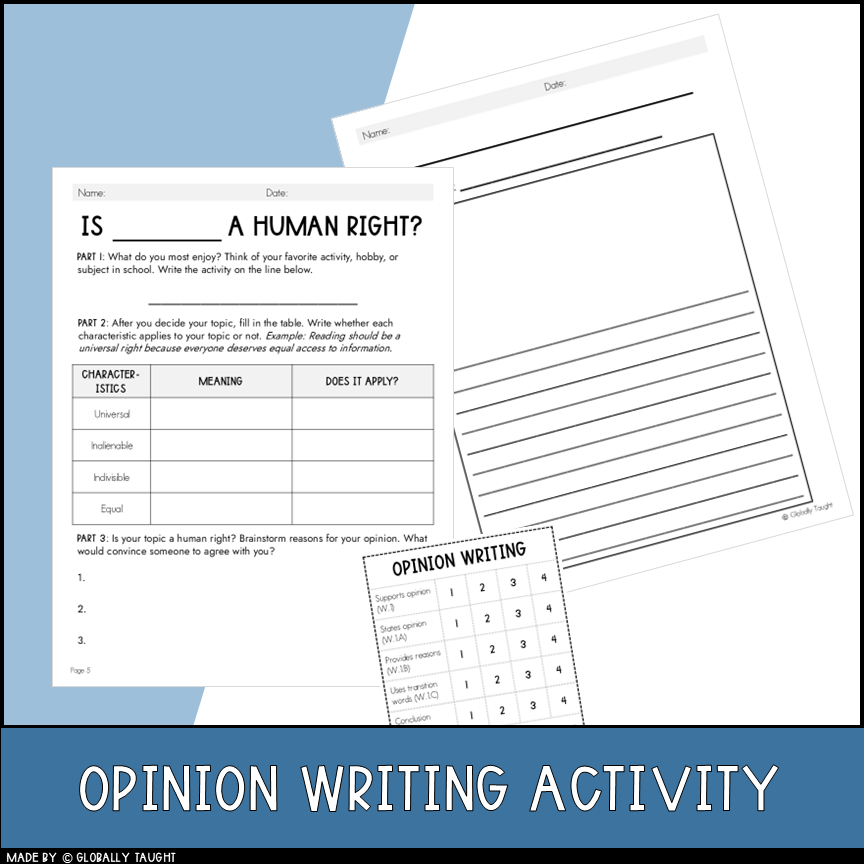
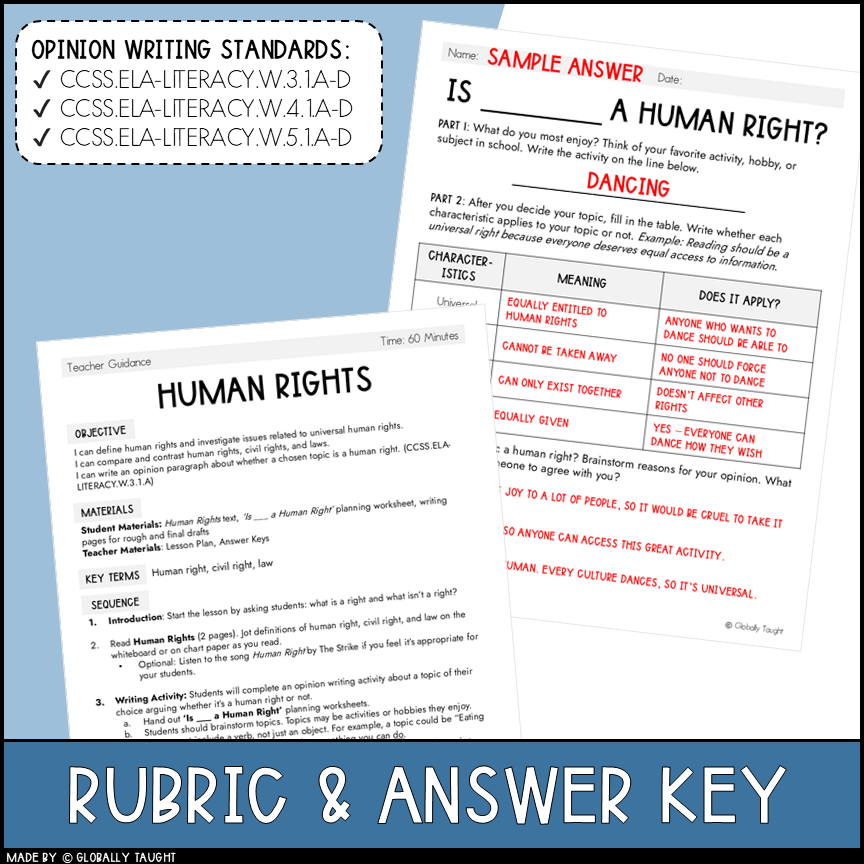
9 Writing Activities with Rubrics (Narrative, Opinion, and Informative)
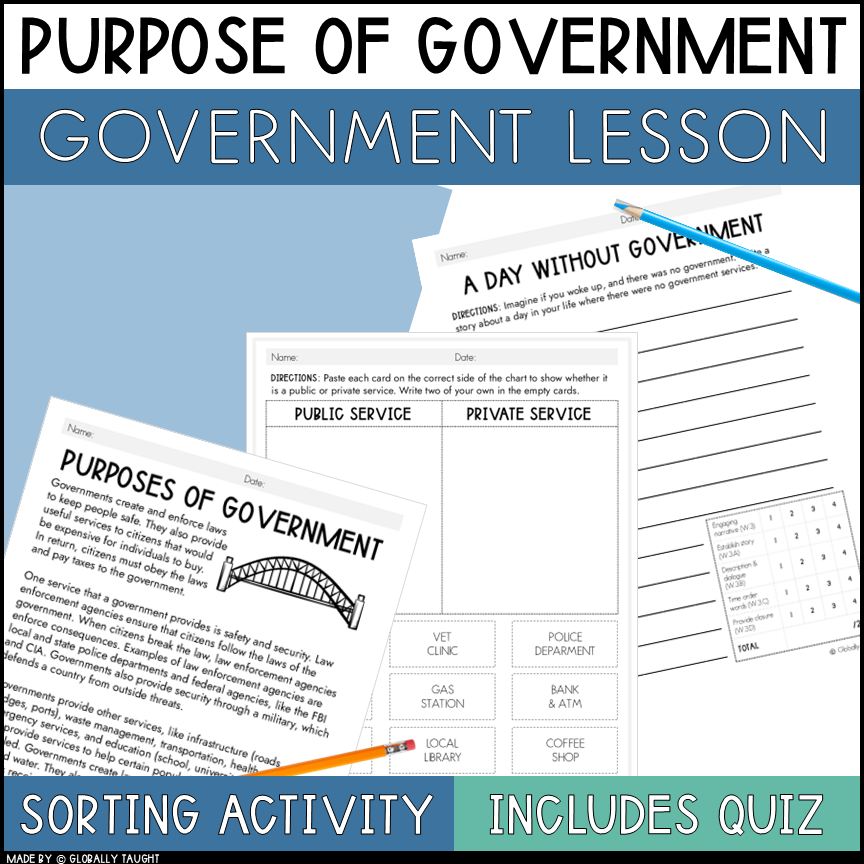
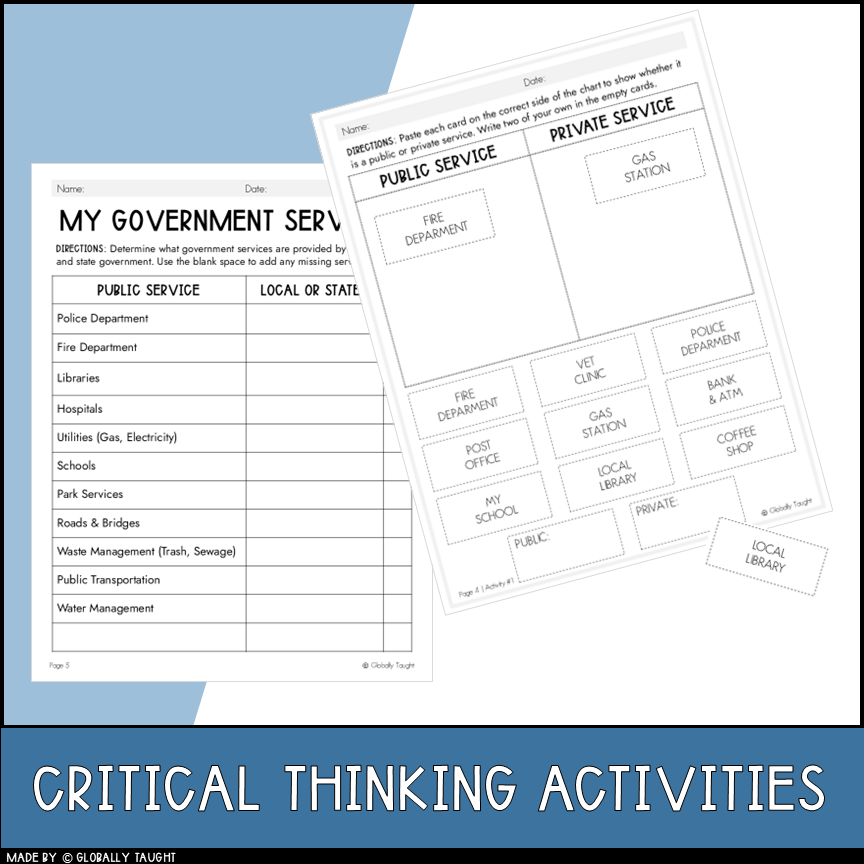
25 Engaging Government Worksheets & Activities
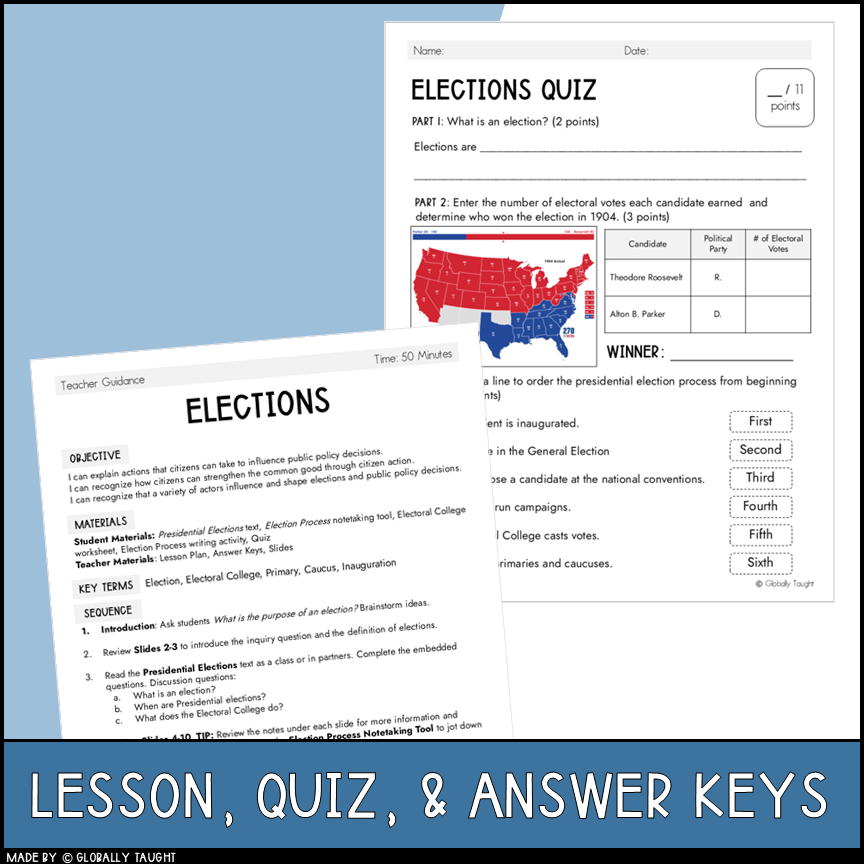
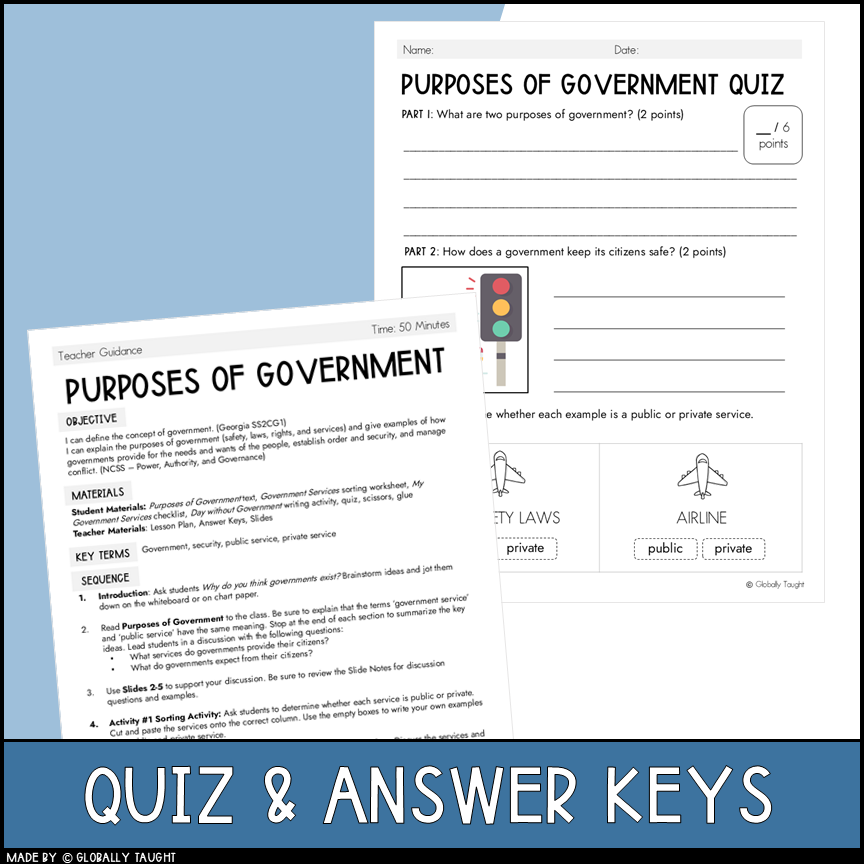
9 Easy-to-Grade Quizzes, plus a Unit Assessment
Answer Keys and Student Samples
Exclusive Unit Bonuses: Scope & Sequence, Unit Overview and Standards Alignment, and Unit Assessment
What You’ll Learn:
Lesson 1: What is Government
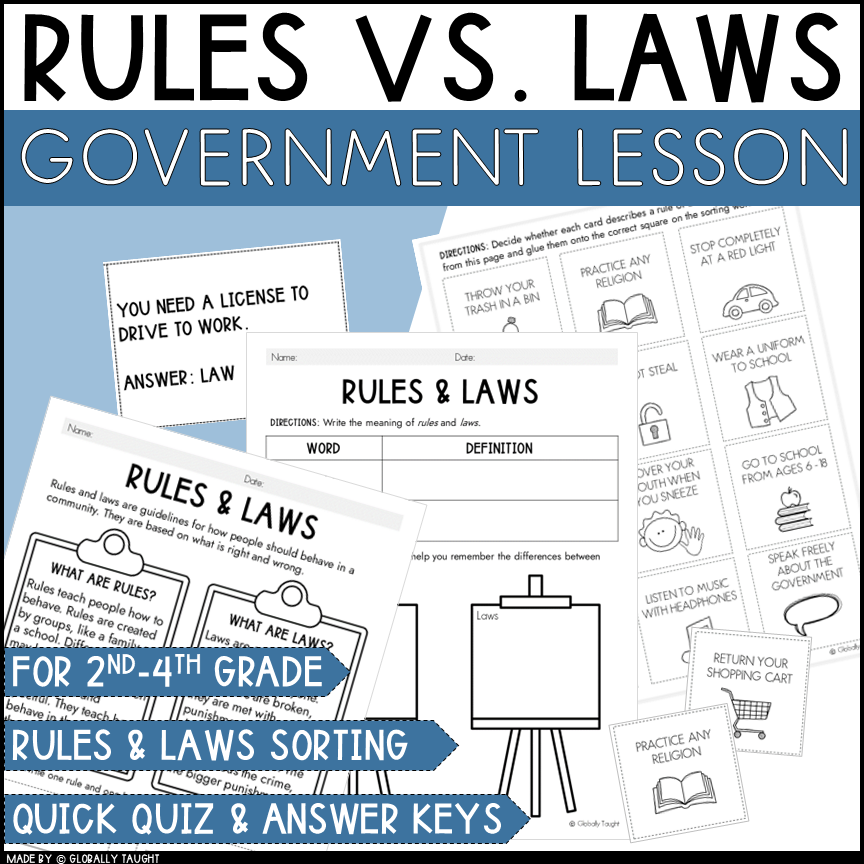
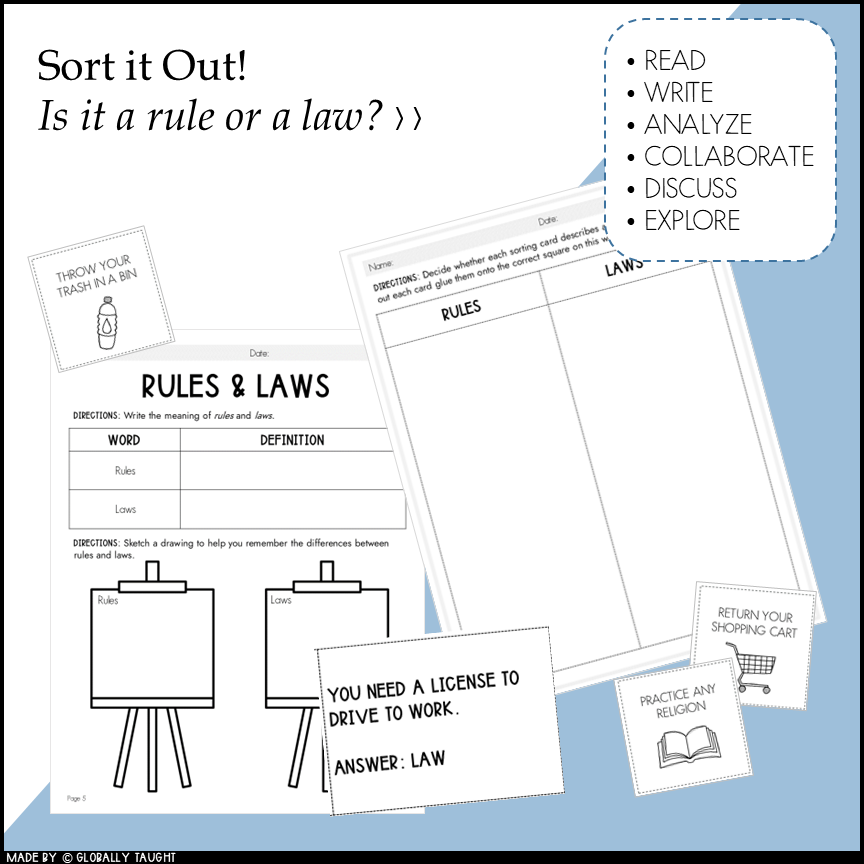
Lesson 2: Rules vs. Laws
Lesson 3: Purpose of Government
Lesson 4: Forms of Government
Lesson 5: Levels of Government (Federal, State, Local)
Lesson 6: Government Leaders
Lesson 7: 3 Branches of Government
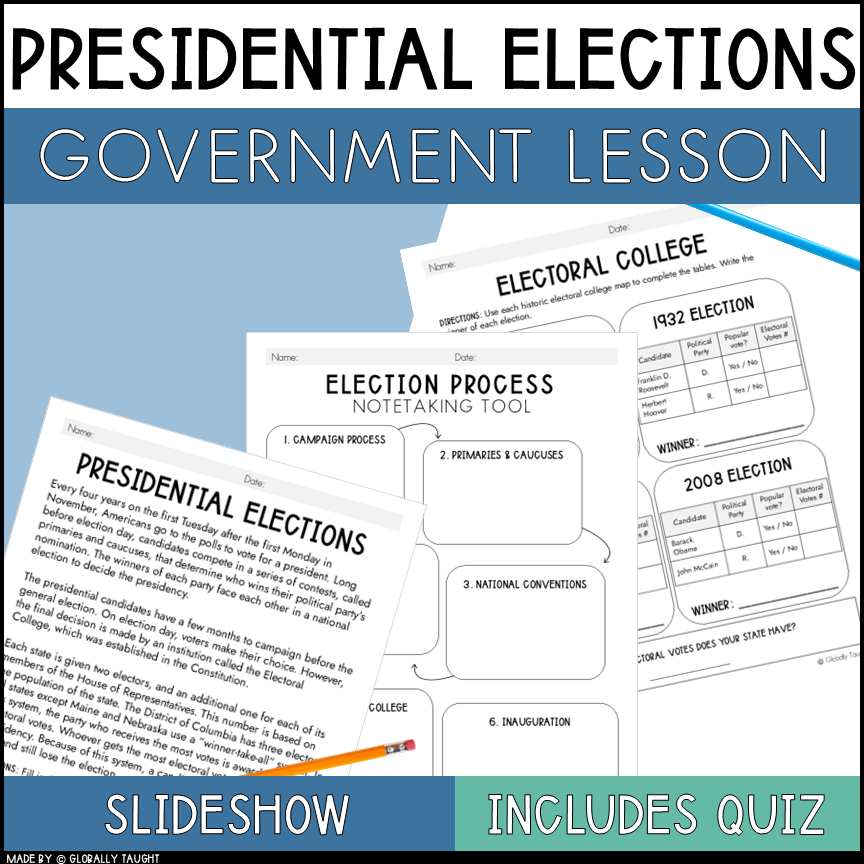
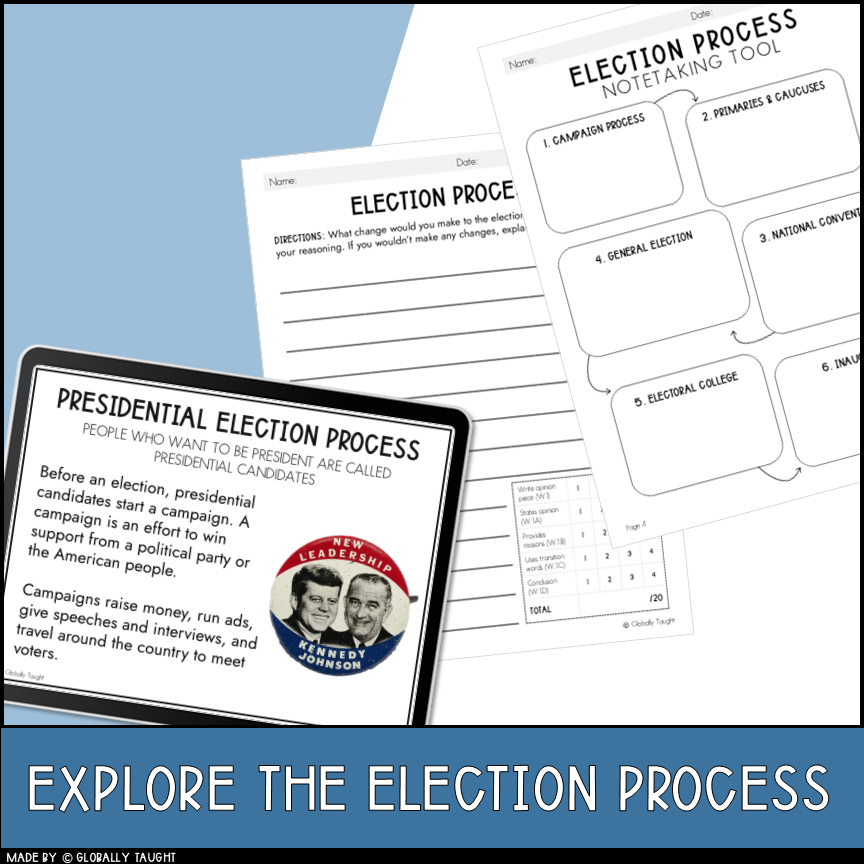
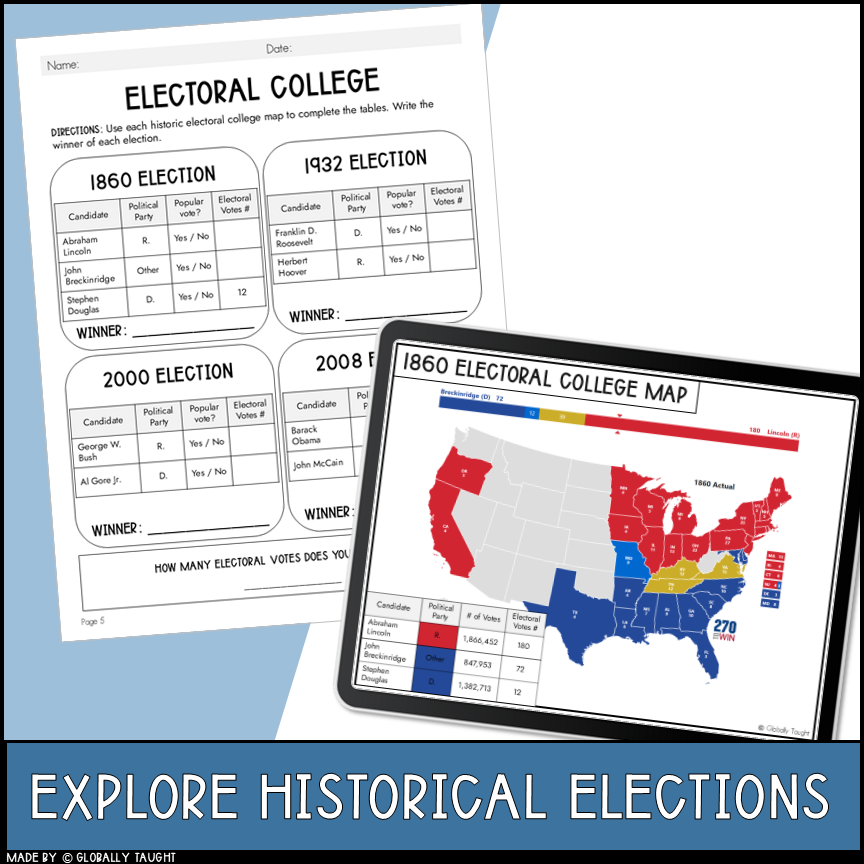
Lesson 8: Presidential Elections
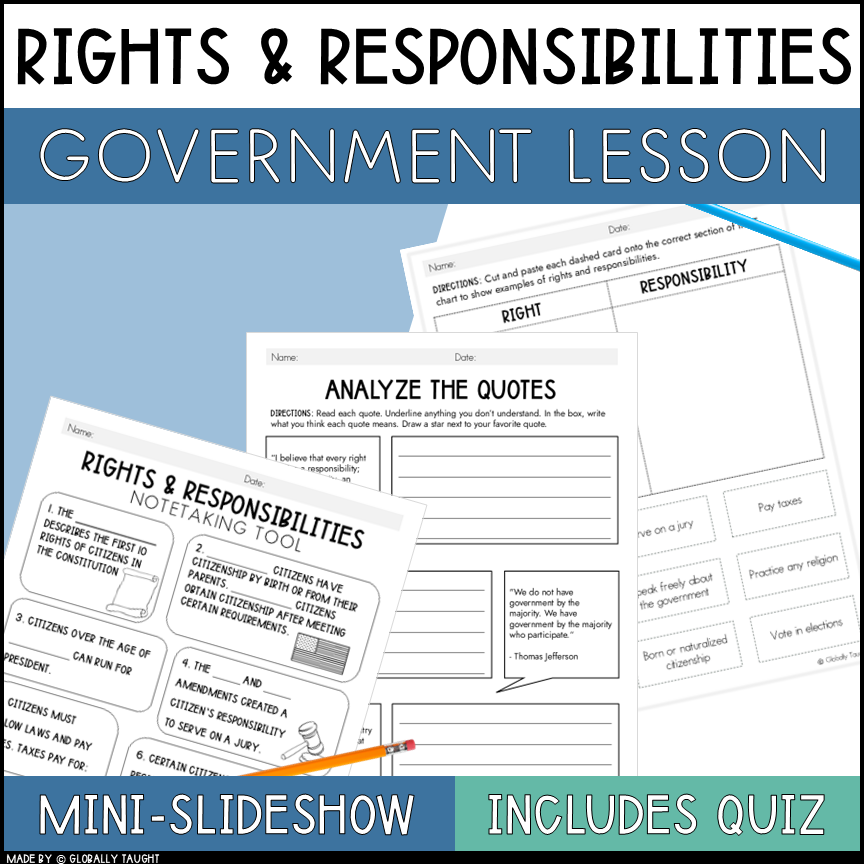
Lesson 9: Rights & Responsibilities
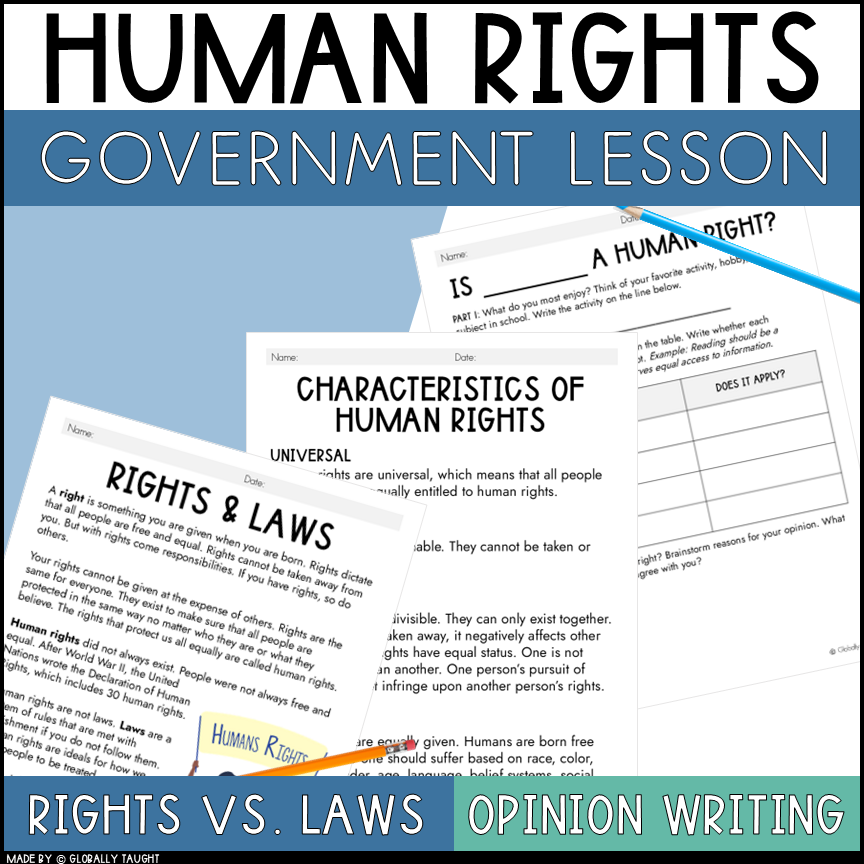
Lesson 10: Human Rights
This Unit Is Perfect If You...
✓ Teach 3rd, 4th, or 5th grade
✓ Need a complete elementary government or civics unit
✓ Aren't sure where to start with teaching government
✓ Want age-appropriate explanations of government and civics concepts
✓ Want students to practice critical thinking and respectful discussion
✓ Need ready-to-use lessons, slides, readings, activities, and assessments
✓ Want to teach government in a factual, age-appropriate way
✓ Need approximately 2–3 weeks of government instruction
This Probably Isn't For You If...
✗ You need a fully digital or Google Slides-based curriculum
✗ You need an editable resource
✗ You are looking for a middle school or high school government curriculum
✗ You want a resource focused primarily on current events rather than foundational civics concepts
Students Will Learn:
✅ Why governments exist and how governments help organize society
✅ The difference between rules and laws and why both are important
✅ Different forms of government, including democracy and monarchy
✅ How government operates at the federal, state, and local levels
✅ The roles and responsibilities of government leaders
✅ How the executive, legislative, and judicial branches work within the U.S. government
✅ Why elections matter and how citizens participate in choosing leaders
✅ The difference between rights and responsibilities
✅ Why understanding human rights is important
✅ How to discuss civic ideas, consider different perspectives, and support their thinking with evidence
Pedagogy
Government can be an abstract topic for elementary students. This unit breaks big civics concepts into age-appropriate questions, examples, readings, discussions, and activities that students can understand and apply.
The lessons use a gradual progression: students first learn the foundational concept, then practice identifying and explaining it, and finally apply their understanding through writing, discussion, activities, and critical thinking. Each lesson includes inquiry questions to give students a reason to think beyond simply memorizing government vocabulary.
The unit also includes more activities than you will typically need, giving you flexibility to choose what works best for your students and schedule.
What Makes This Unit Unique?
This government unit is way more than worksheets. Students don't simply memorize the three branches of government or copy definitions from a textbook.
They read, discuss, write, analyze, and apply what they are learning through:
Teaching slides
Informational reading passages
Inquiry questions
Writing activities
Government scenarios
Discussion activities
Critical-thinking questions
Quizzes and assessments
Real-world examples
The unit is designed to help students understand how government works and why it matters, while giving them opportunities to practice the skills they need to become informed citizens.
Why You'll Love This Unit
Easy-to-Use
You don't need to be a government or civics expert. The unit walks you through each concept with step-by-step lesson plans, answer keys, and student samples. Everything you need is in one place.
Engaging for Students
Government doesn't have to be boring. Students explore civics concepts through questions, discussions, writing, real-world examples, and activities that help connect government to their own lives and communities.
Enjoyable to Teach
You became a teacher because you love teaching, not because you love spending hours researching how to explain the branches of government to a 9-year-old. With 10 fully planned lessons and ready-to-use teaching materials, you can spend less time preparing and more time teaching.
Teaching Government Without Taking Sides
Teaching government to elementary students can feel complicated. You want students to understand how government works without turning your social studies classroom into a political debate. This unit focuses on foundational government and civics concepts rather than partisan politics.
Students learn factual information about government structure, rights, responsibilities, elections, and civic participation. When appropriate, they are given opportunities to discuss ideas, consider multiple perspectives, and support their thinking with evidence. The goal isn't to tell students what to think.
It's to give them the knowledge and critical-thinking skills they need to understand the role of government.
How to Use in the Classroom
This unit includes 10 lessons, generally designed for approximately 50-minute periods.
The pacing is flexible. Use the complete sequence for a 2–3 week government unit, or select individual lessons that fit your existing social studies curriculum.
Whole-Class Instruction
Use the teaching slides and lesson plans to introduce each government concept and guide students through discussion and practice.
Small Groups
Use reading passages, activities, and discussion questions for collaborative learning and additional practice.
Writing
Students have opportunities to respond through narrative, opinion, and informative writing, with rubrics included.
Independent Practice
Students can complete many of the reading, writing, and practice activities independently after receiving instruction and guided practice.
Discussion & Critical Thinking
Use the inquiry questions and discussion prompts to help students explain their thinking, consider different perspectives, and support their ideas with evidence.
Frequently-Asked Questions
Q: What civics topics should upper elementary students learn?
Students should learn how government impacts people from local government all the way to the federal government. Students should understand the rights and responsibilities of individuals and discuss how to take informed civic action as a citizen, along with practical information about the purpose and structure of government.
Q: What is included in this government unit?
This unit includes step-by-step lesson plans, reading passages, activities, projects, discussion prompts, and assessments.
Q: How do you make government lessons engaging for kids?
Role-playing, debates, real-world examples, simulations, and inquiry-based discussions help students connect civics concepts to everyday life.
Q: Is this unit unbiased?
Yes! The unit focuses on objective facts about government and government structure that all students should know. There are opportunities for students to practice respectful discussion skills about topics, like the qualities of a leader, which is an essential civic skill.
Q: Is this civics curriculum aligned to standards?
Yes! The lessons are designed to support upper elementary social studies and civics standards in Texas and Georgia, but apply broadly across all states.
Q: Can this government unit work for 3rd–5th grade students?
Yes. Activities are designed specifically for upper elementary learners with age-appropriate explanations and critical thinking opportunities.
Q: How long does it take to teach this government unit?
There are 10 lessons, each approximately 50 minutes. We always include more activities than you will need for students to grasp each concept. Lessons are flexible and can be adapted for shorter or longer instructional blocks.
Q: Does this unit encourage respectful discussion and critical thinking?
Yes. Students practice analyzing ideas, discussing multiple perspectives, and supporting their thinking with evidence.
Before You Purchase
This is a digital download. No physical product will be shipped.
The resource is provided as a ZIP file containing the unit materials. Please make sure your device can open ZIP files and the included file formats before purchasing.
This resource is not editable unless otherwise noted.
Your purchase includes a single-teacher, single-classroom license. Please purchase additional licenses if you intend to share the resource with other teachers.
You will be able to access your purchase through your Globally Taught account and receive future updates.
Please preview the resource before purchasing to make sure it is a good fit for your students and teaching needs.
Quick Product Details
Grade: 3rd–5th
Pages: 128 Pages | 77 Slides
Lessons: 10
Teaching Duration: 2-3 weeks
Answer Key: Yes
Format: Digital download
Standards Alignment: Included