 Image 1 of 4
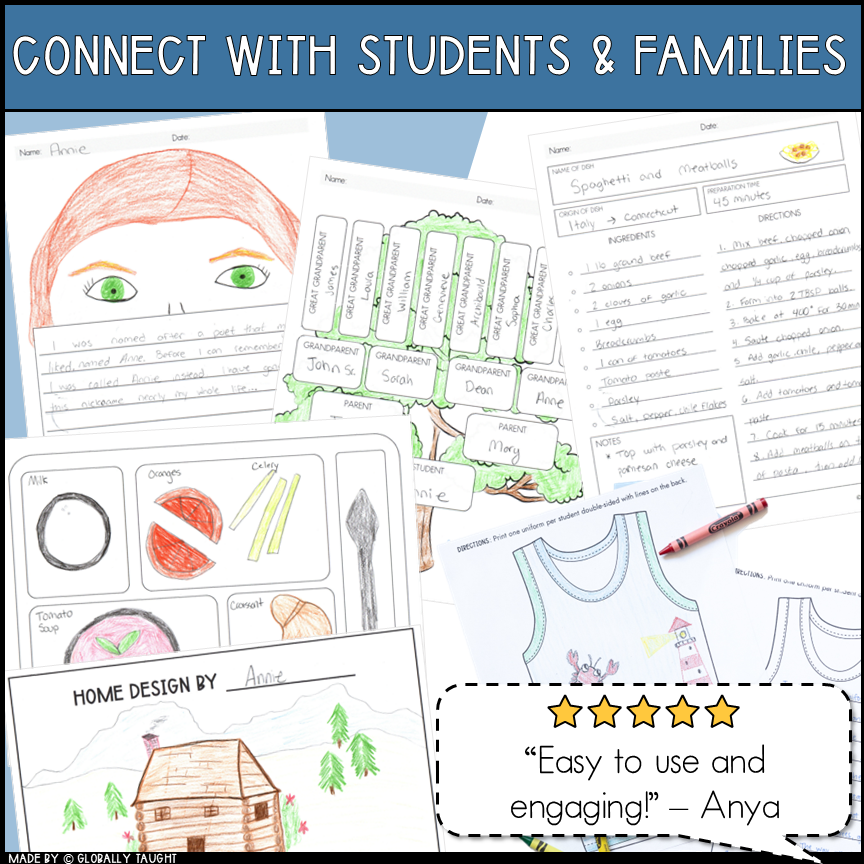 Image 2 of 4
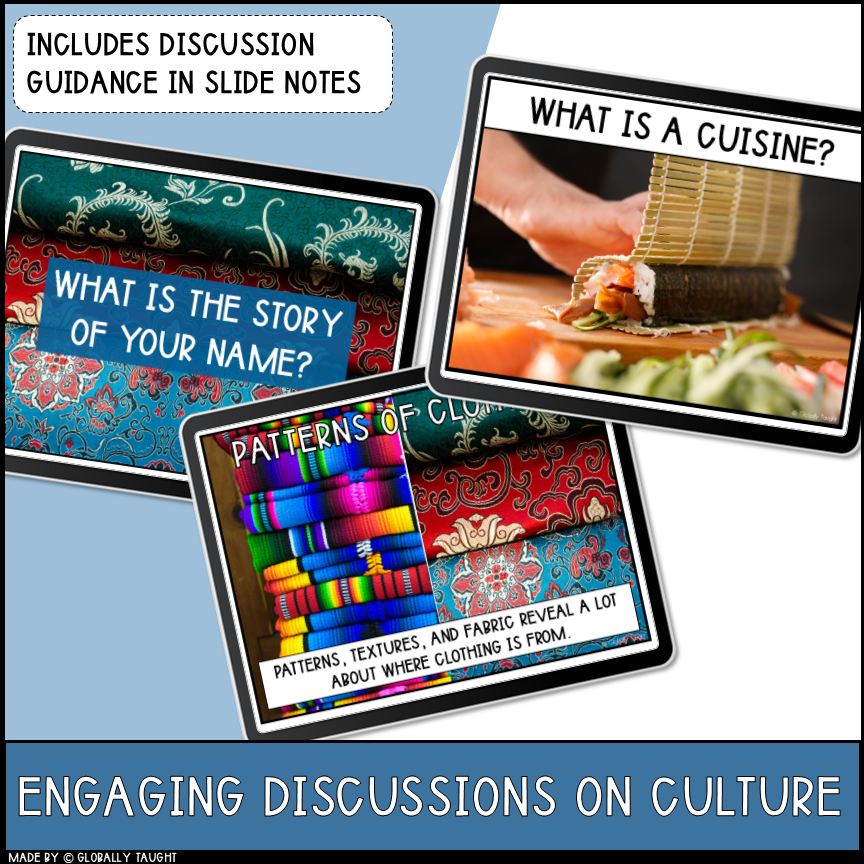 Image 3 of 4
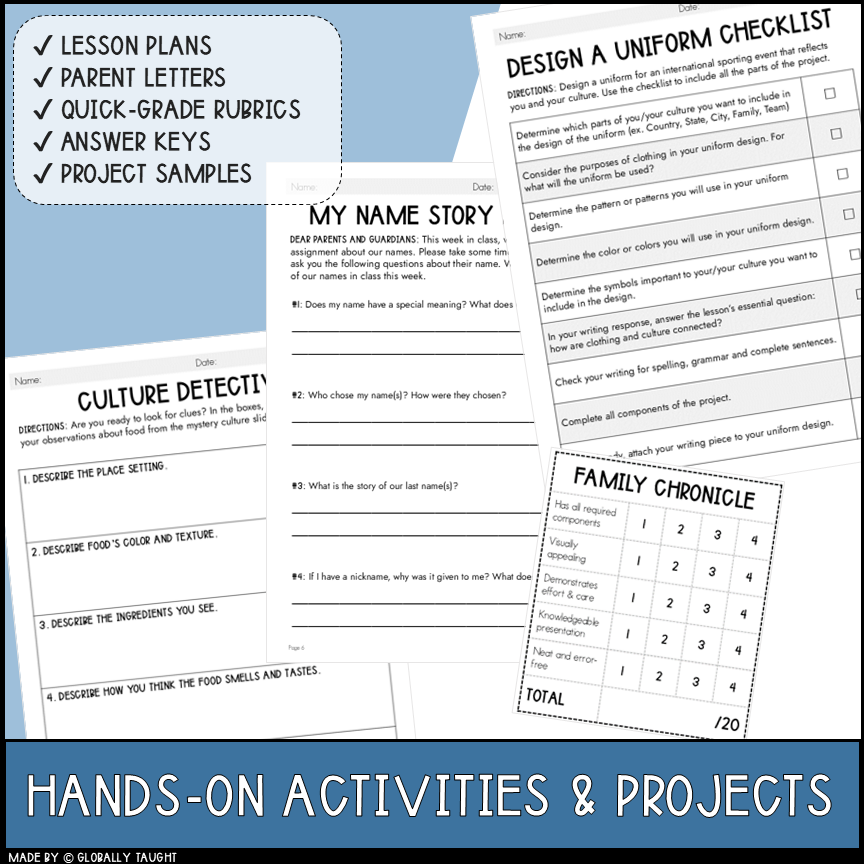 Image 4 of 4
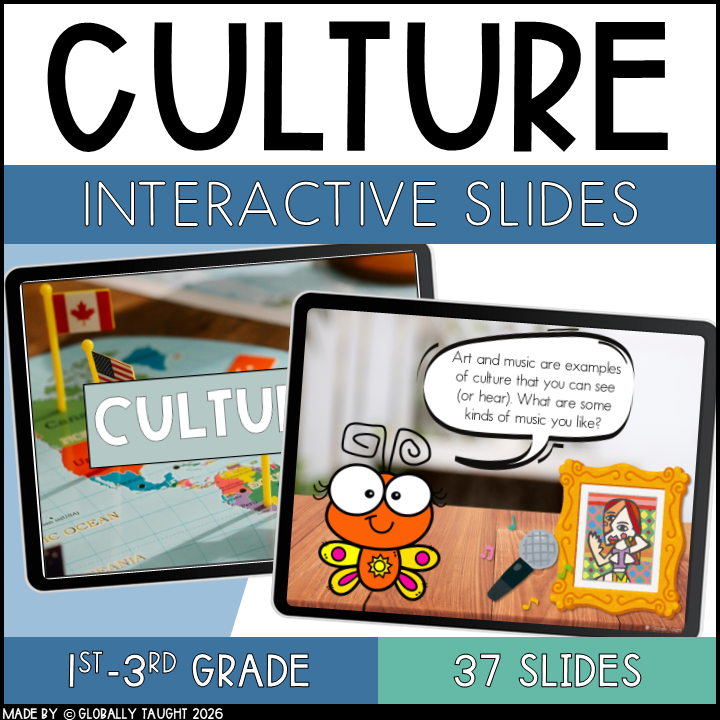
Cultural Identity Unit for 3rd–5th Grade | 6 Cultures Around the World Lessons
Build classroom community and family connections.
Discover cultures around the world, and develop your students' sense of self with this Cultural Identity Unit.
Students begin by exploring their own cultures, from their names to family histories to food traditions. You’ll look at examples of cultures around the world with engaging slideshows and discussions. Through research, writing, discussion, creativity, and hands-on projects, you’ll build a strong classroom community.
Unit Details
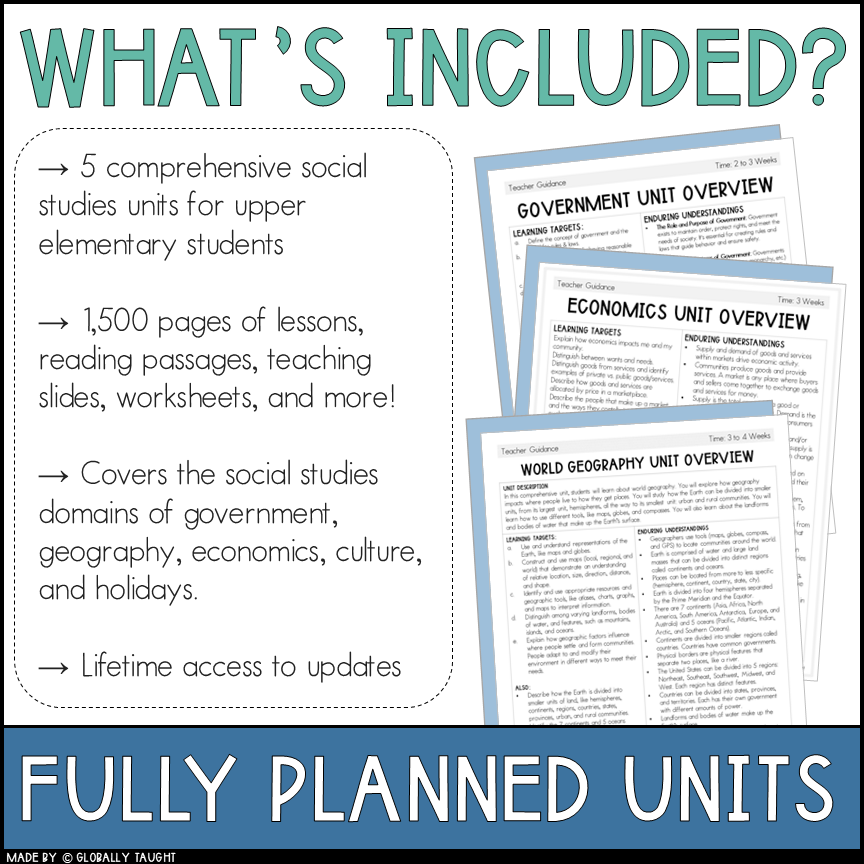
Two-week cultural identity unit for upper elementary students
Over 100 pages and 100 slides of ready-to-teach lessons, cultural identity projects and activities, and slideshows with discussion guidance built into the slides
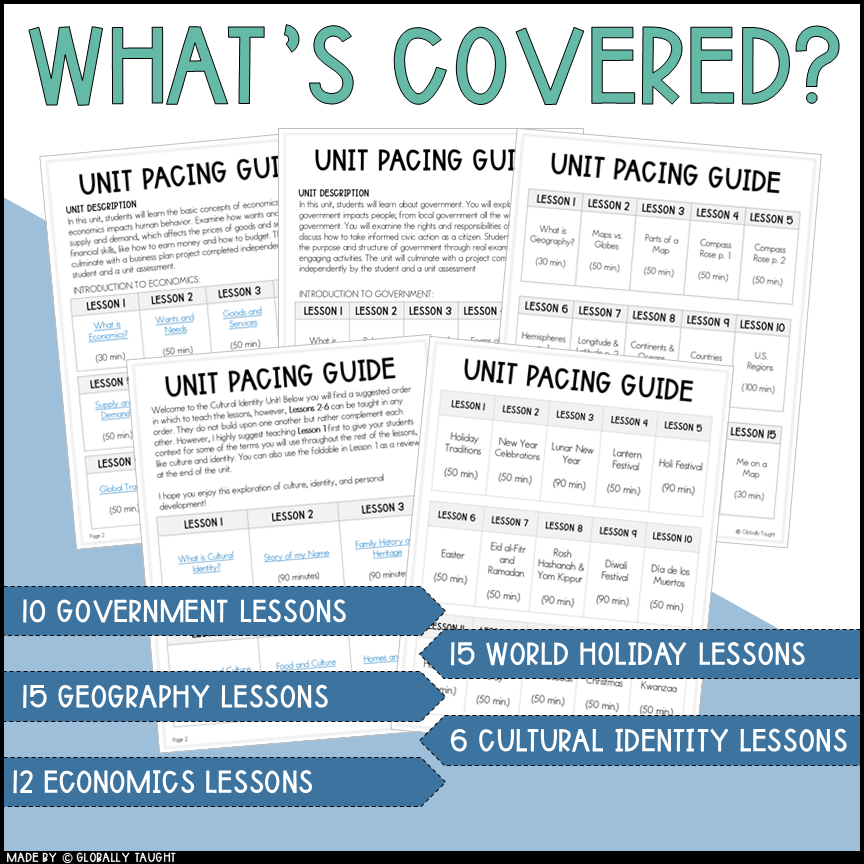
One ZIP file organized into six lessons by topic
You'll Receive
Each lesson includes clear directions, learning objectives, materials, and activities.
Lesson 1: What Is Cultural Identity?
Lesson 2: Story of my Name Project
Lesson 3: Family Traditions Project
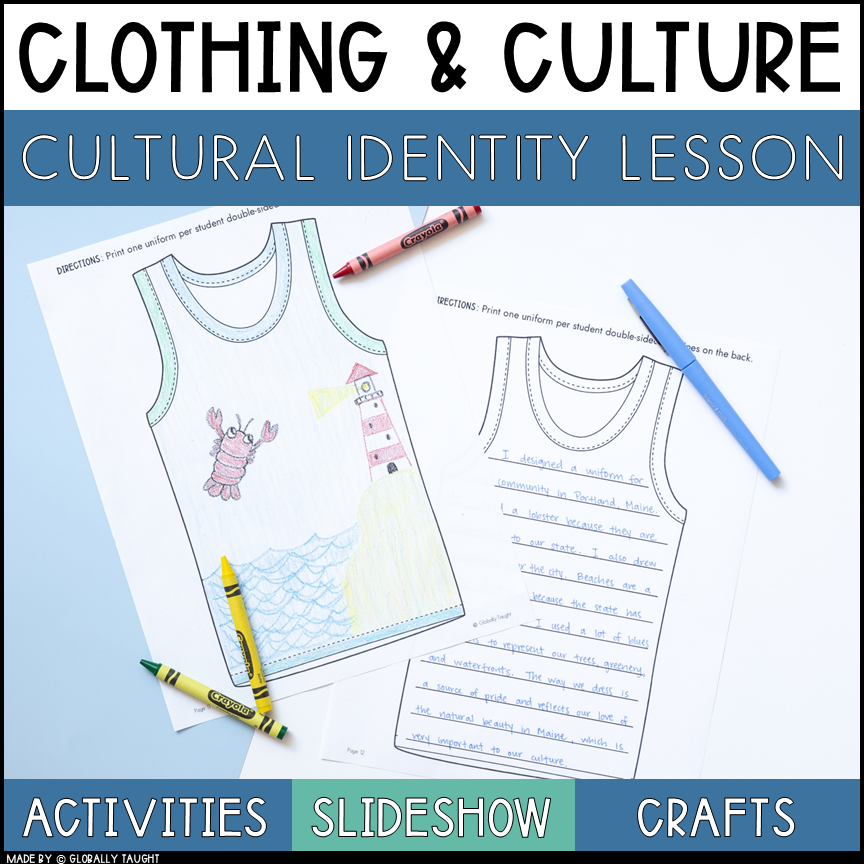
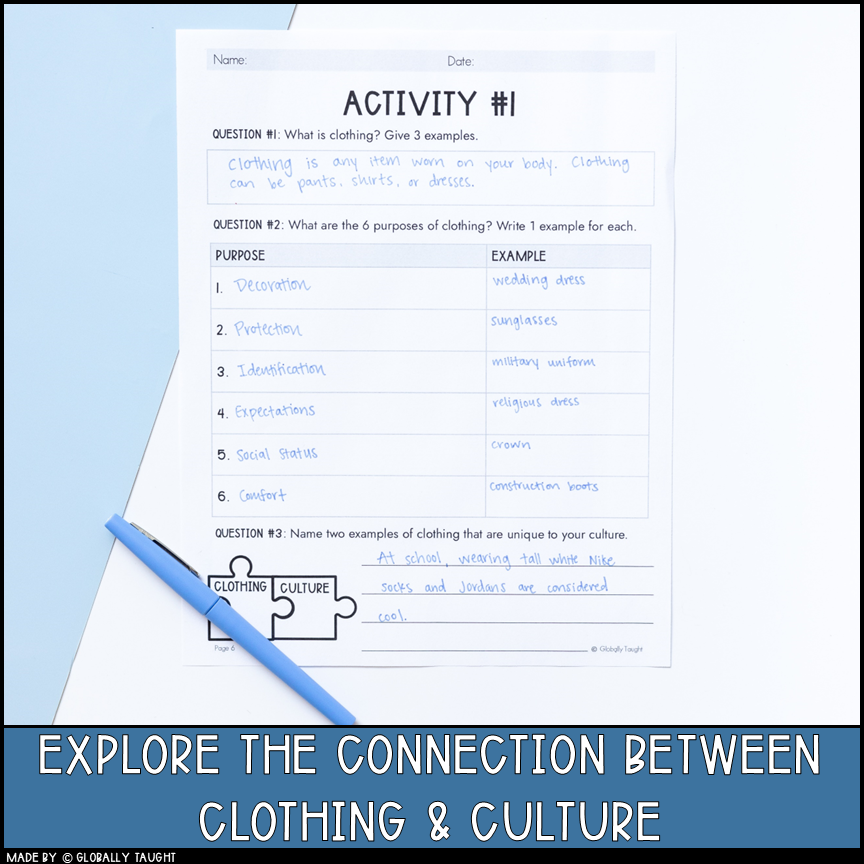
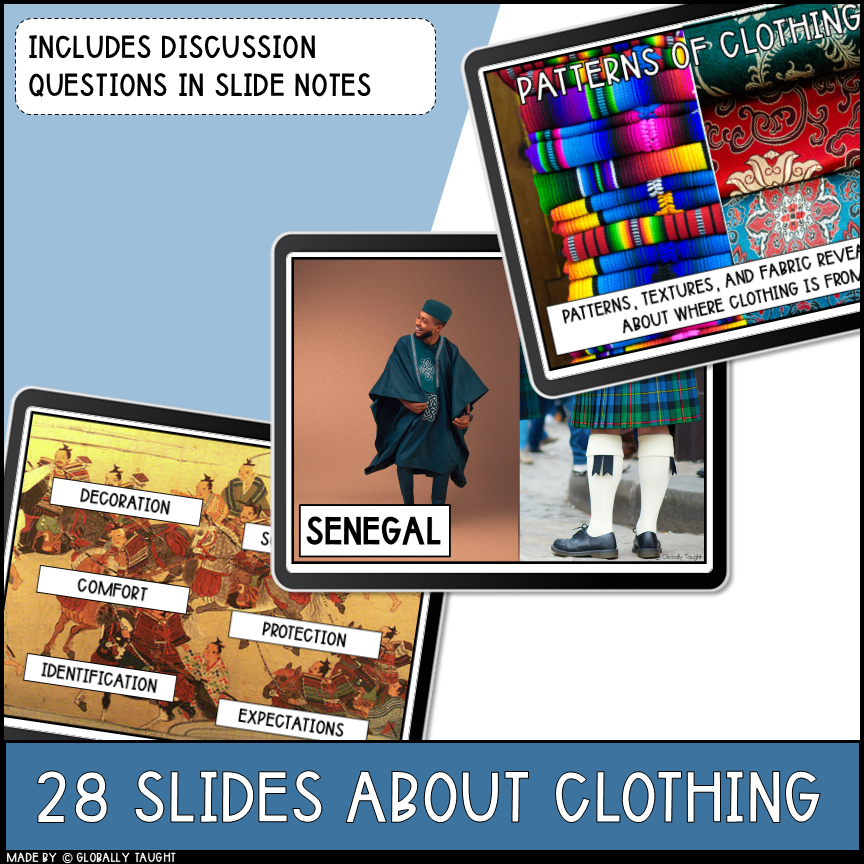
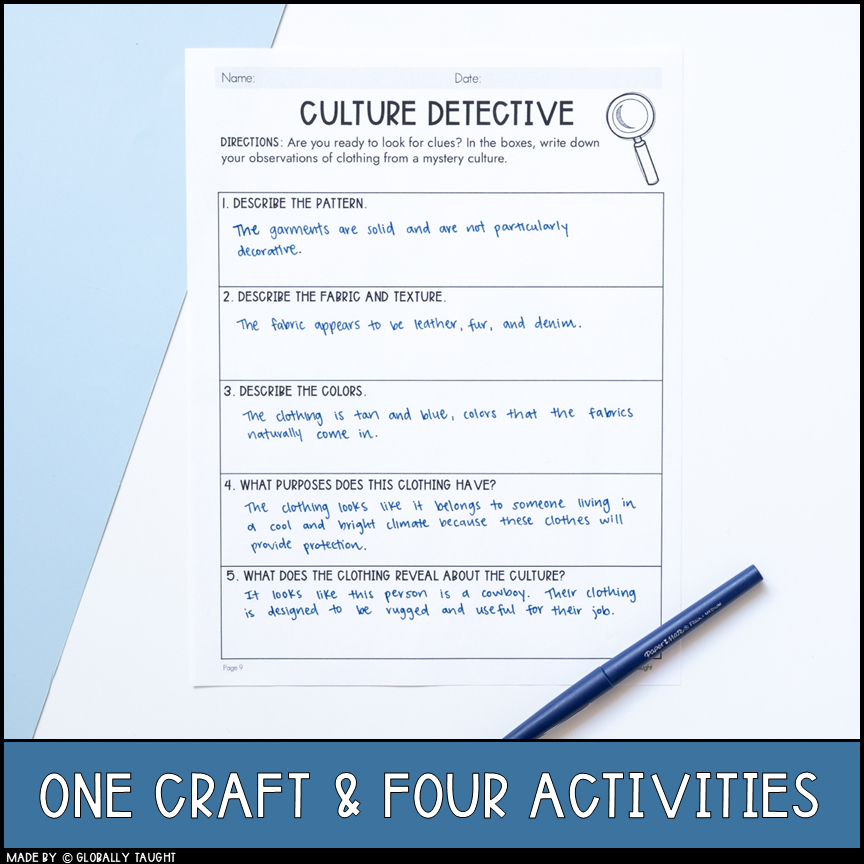
Lesson 4: Clothing and Culture Lesson
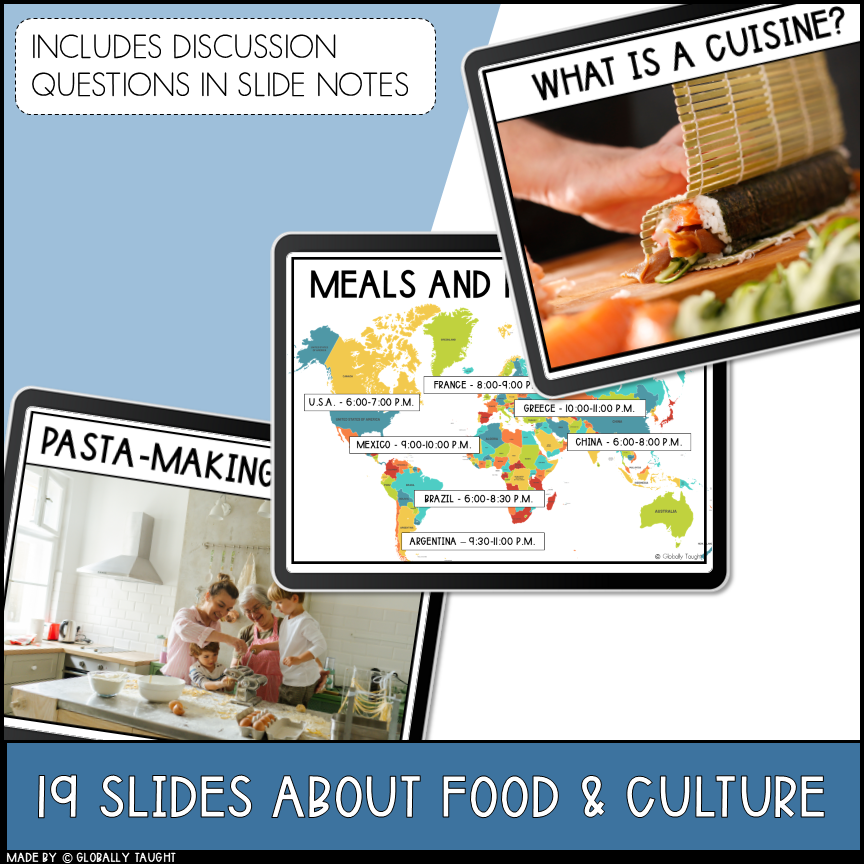
Lesson 5: Food around the World Lesson
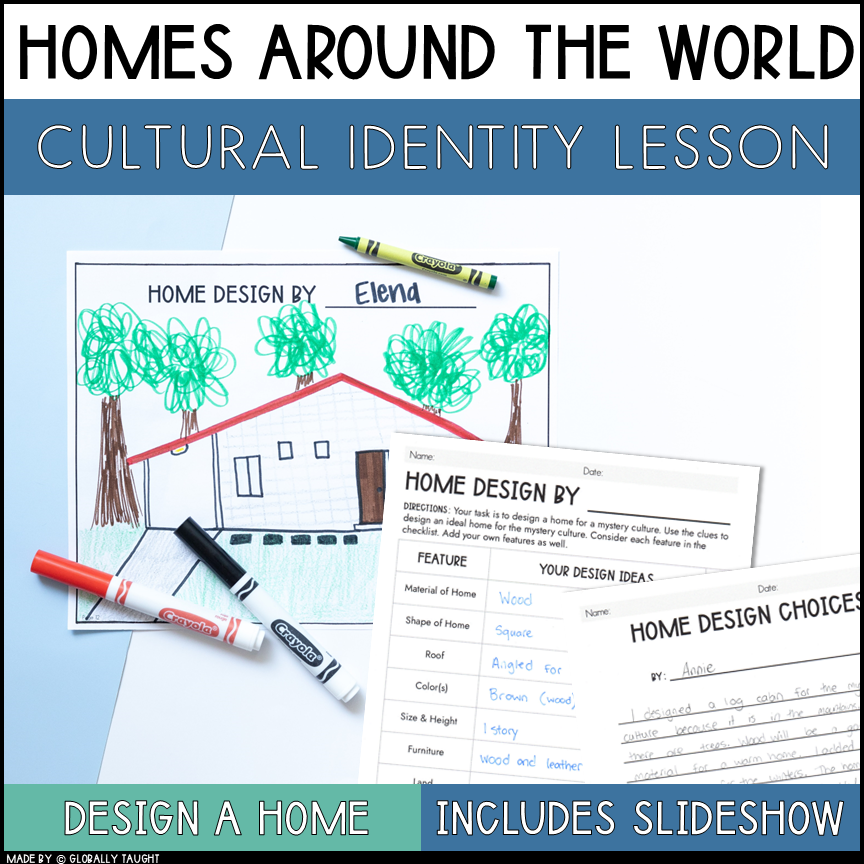
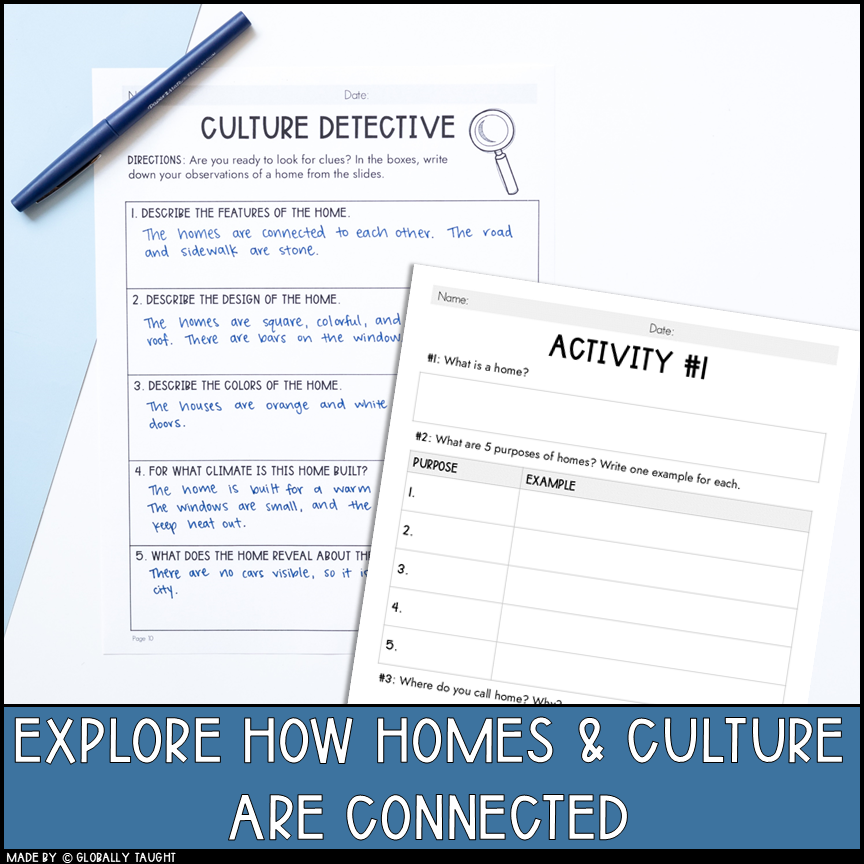
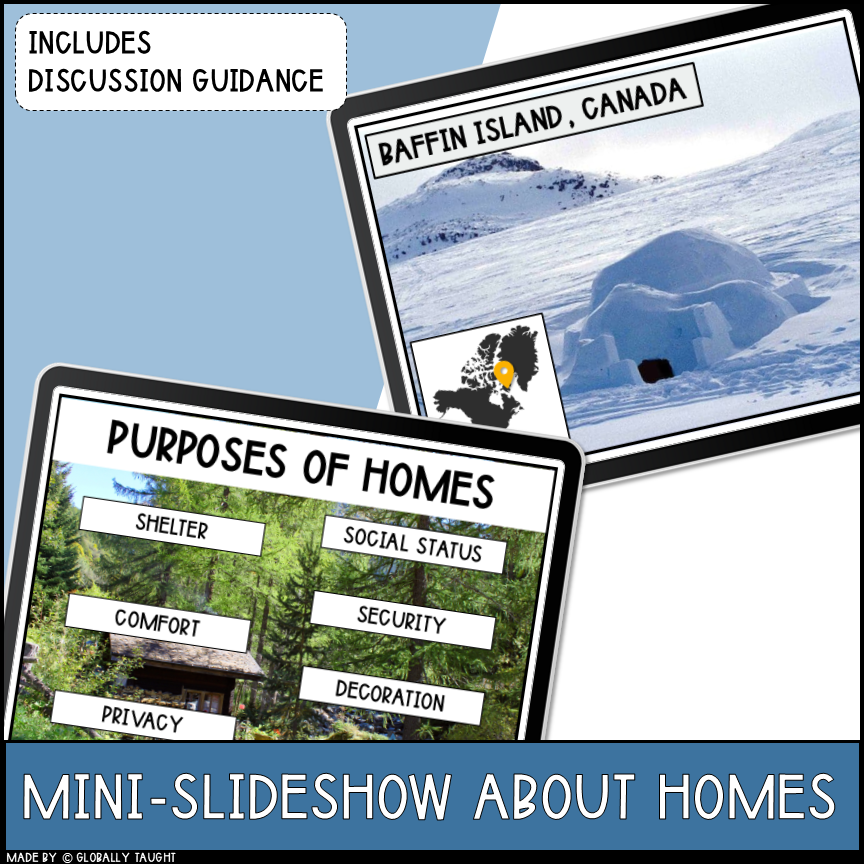
Lesson 6: Homes around the World Lesson
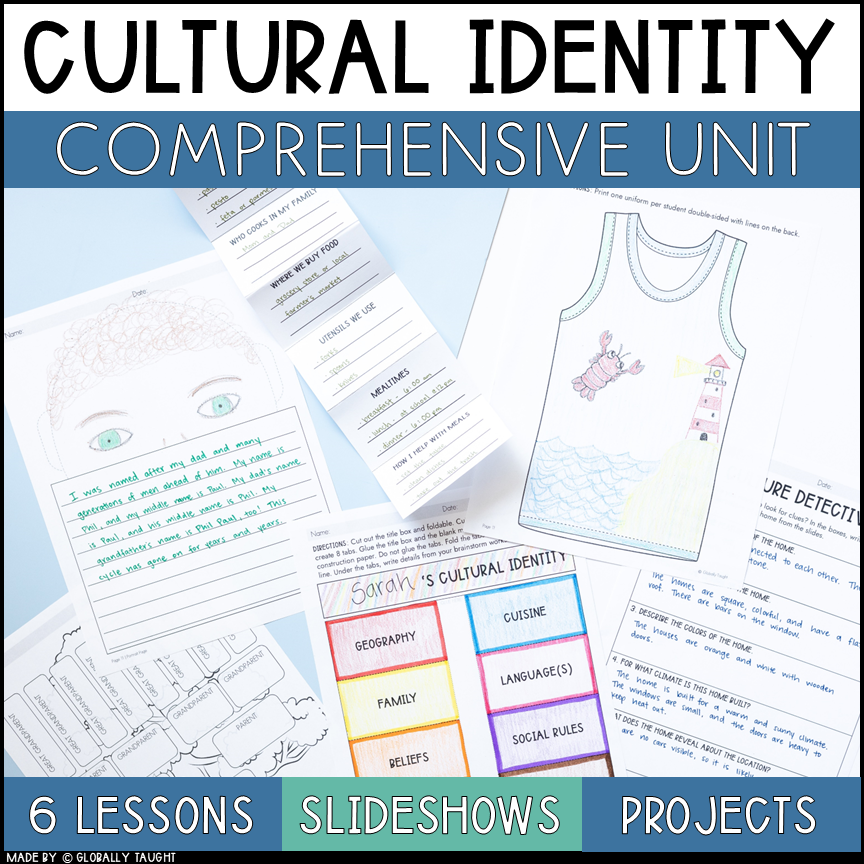
8 Cultural Identity Projects
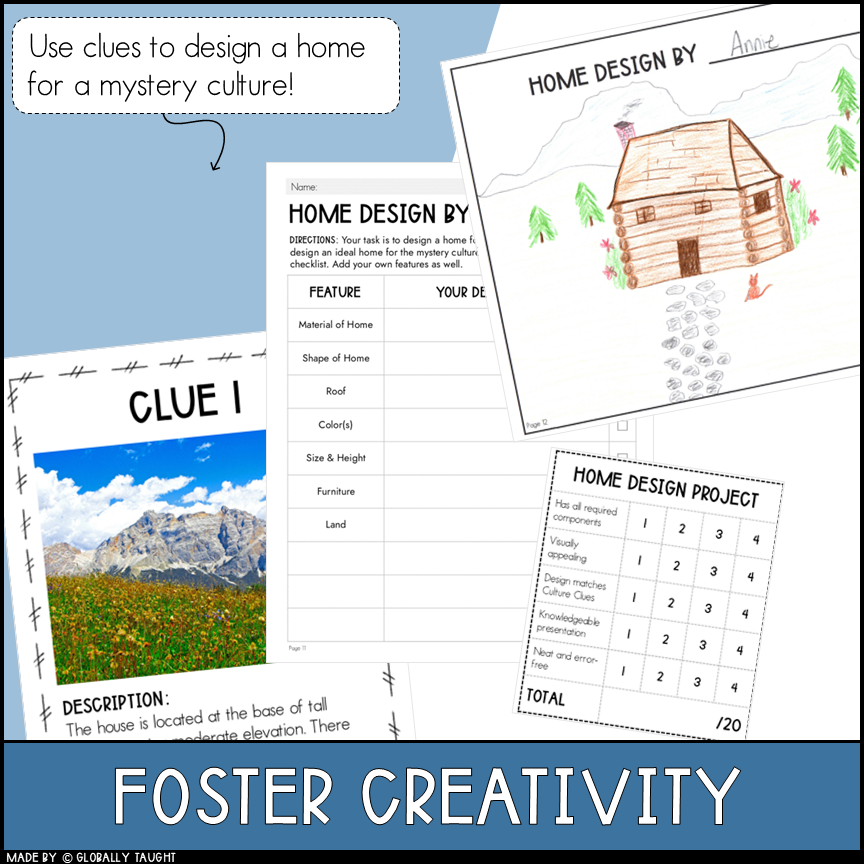
Design a home for a mystery culture
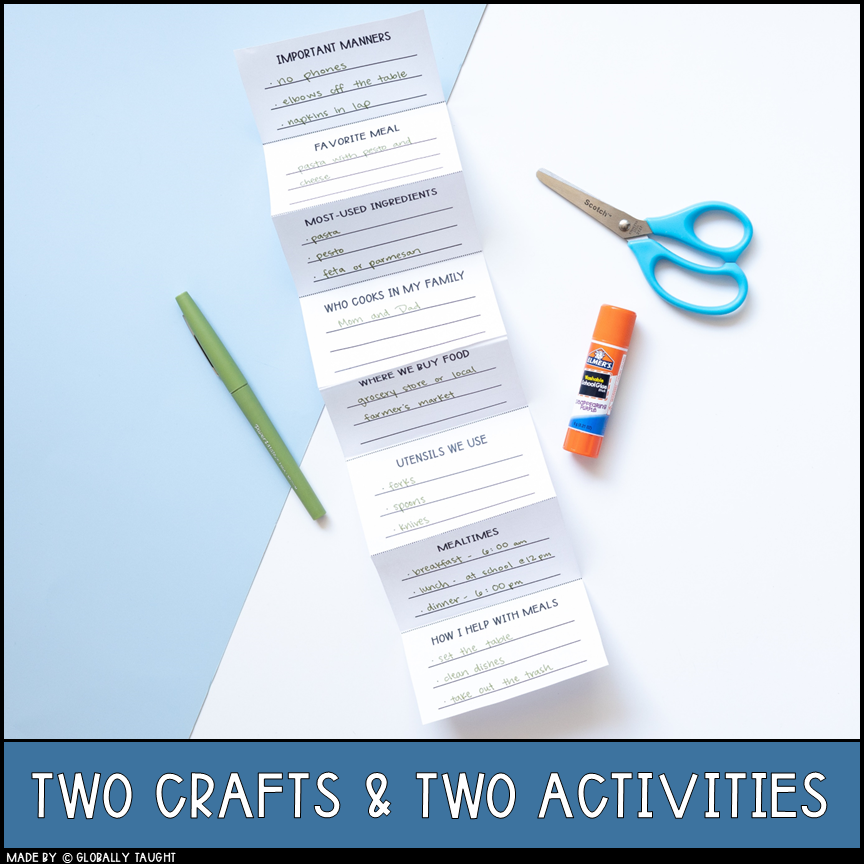
Write a family recipe
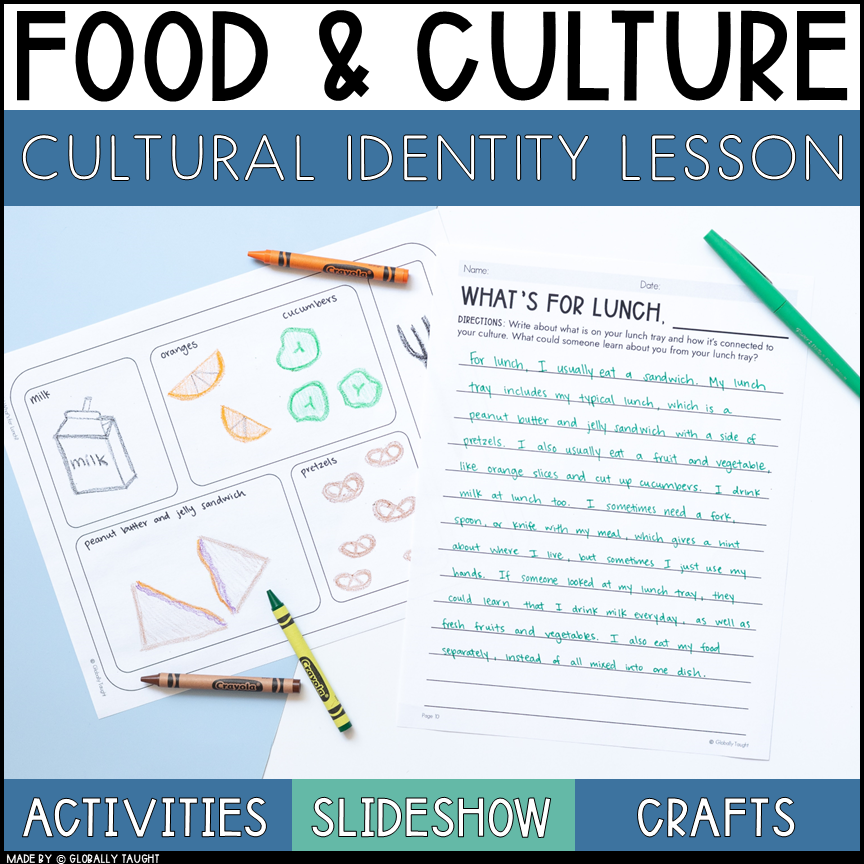
Draw a typical lunch
Create a family tree
Write the story of their name
Create a self-portrait
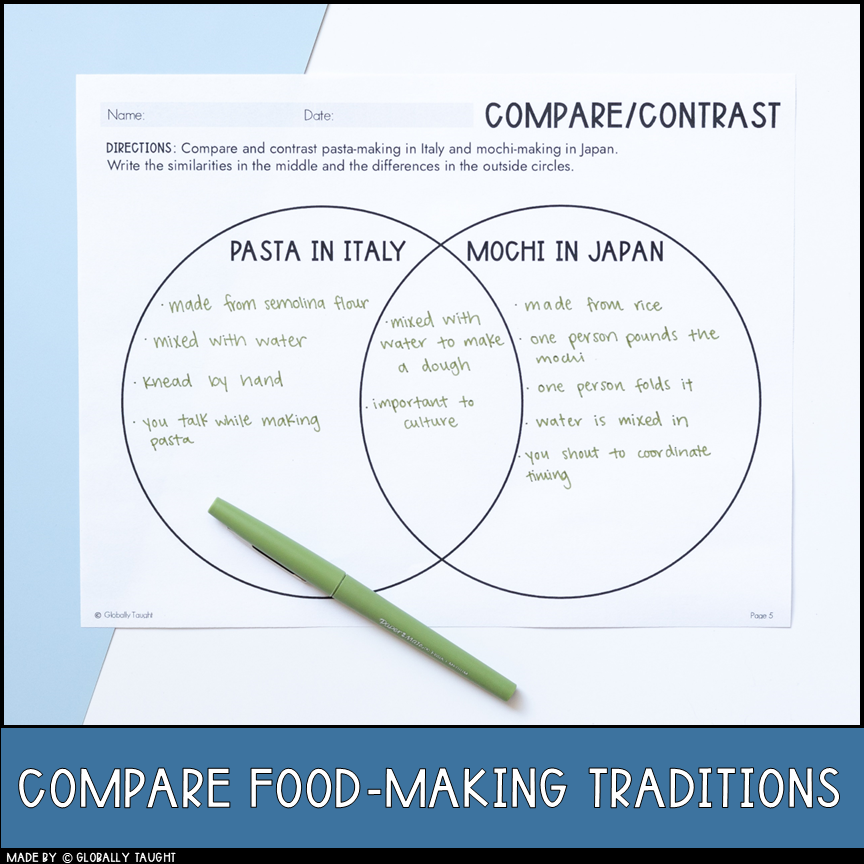
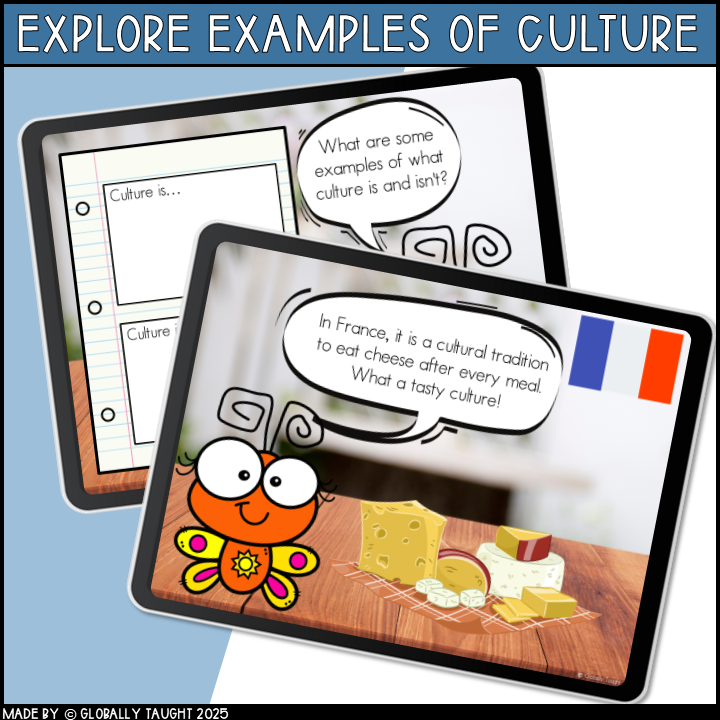
Explore cultural traditions
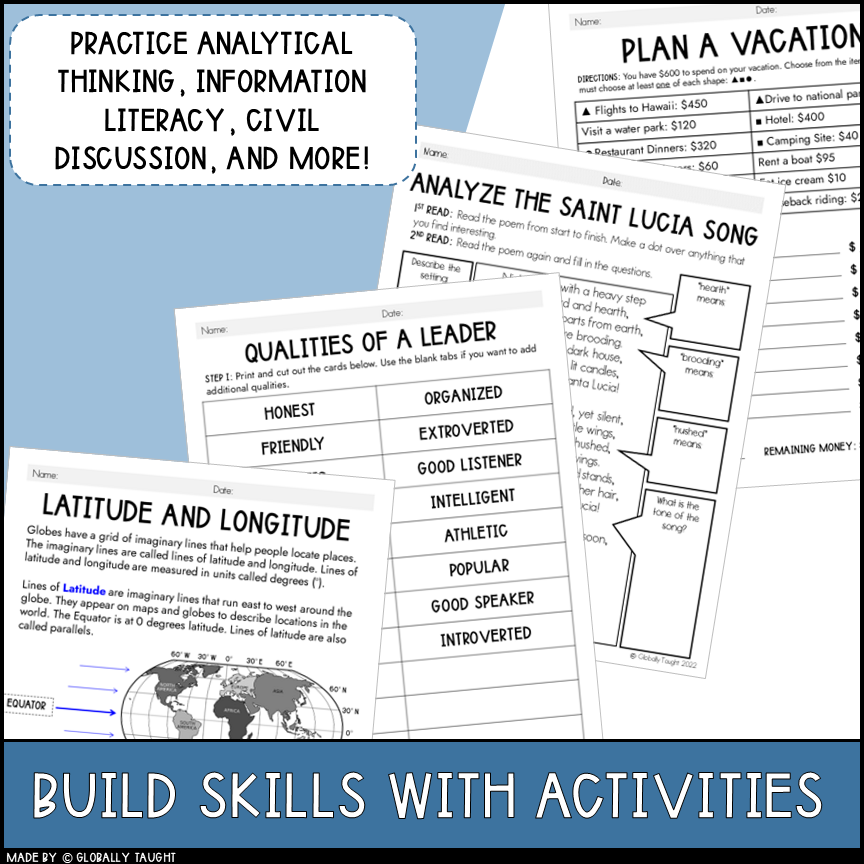
Additional Activities
The unit also includes 14 activities that give students additional opportunities to read, write, discuss, research, reflect, and create.
Teaching Materials
6 teaching slideshows
Discussion guidance built into the slides
Learning targets
Inquiry questions
Project rubrics
Answer keys
Student samples
Editable parent letter
Unit pacing guide
Standards alignment guide
Before/after unit written reflection
Bonus About Me phone-feed craft + rubric
Students Will Learn
Identify and describe factors that contribute to their cultural identity, including family, names, food, clothing, traditions, and homes.
Explain how everyday experiences and traditions can be expressions of culture.
Recognize that people from different cultural backgrounds may interpret experiences differently.
Explore their own family history, heritage, and traditions.
Compare cultural practices while avoiding assumptions about individuals or groups.
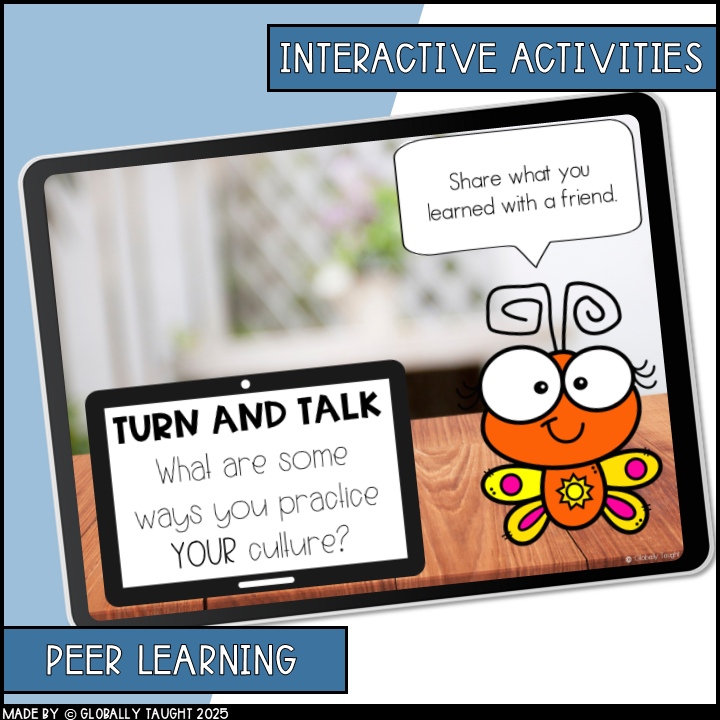
Participate in respectful discussions about culture and identity.
Build awareness and appreciation for classmates whose experiences and cultural practices may differ from their own.
Pedagogy
This unit follows a project-based learning approach. Rather than simply teaching students definitions of culture and cultural identity, students develop their understanding through a series of projects and investigations connected to their own lives and the world around them.
The sequence moves between learning about culture, reflecting on personal experiences, investigating examples from around the world, and creating something of their own. Each lesson gives students opportunities to practice important skills, like research, writing, discussion, reflection, comparison, creativity, and more. The unit is designed for upper elementary students but can be differentiated for other grade levels.
How to Use in the Classroom
This unit is designed to take approximately two weeks, with lessons lasting approximately 90 minutes depending on the activities you select.
Back-to-School Community Building: Use the unit during the first weeks of school to combine social studies instruction with meaningful opportunities for students to learn about one another.
Whole-Class Instruction: Use the teaching slides and lesson plans to introduce concepts, model thinking, and guide discussions.
Projects & Small Groups: Students can complete projects independently, with partners, or in small groups depending on the activity.
Writing & Research: Use the included projects to integrate social studies with informative, narrative, and reflective writing.
Build a Classroom Display: Many of the projects can become classroom displays that represent the identities and experiences of your students.
Frequently Asked Questions
Q: Why is it important to teach culture in elementary school?
Teaching culture helps students develop empathy, global awareness, respect for diversity, and a stronger understanding of their own identities.
Q: What is included in this culture unit?
Students explore traditions and customs, personl identity, family history and heritage, and examples of cultures around the world through discussions and projects.
Q: How do you teach cultural identity respectfully?
This unit encourages students to share experiences, compare perspectives, and learn about cultures through inquiry and discussion.
Q: Are the culture activities appropriate for 3rd–5th grade?
Yes. Lessons are designed specifically for upper elementary students with engaging and age-appropriate activities.
Q: Can this culture unit support social-emotional learning?
Yes. Students practice empathy, communication, reflection, and respectful discussion throughout the lessons.
Q: Does this unit connect culture and geography?
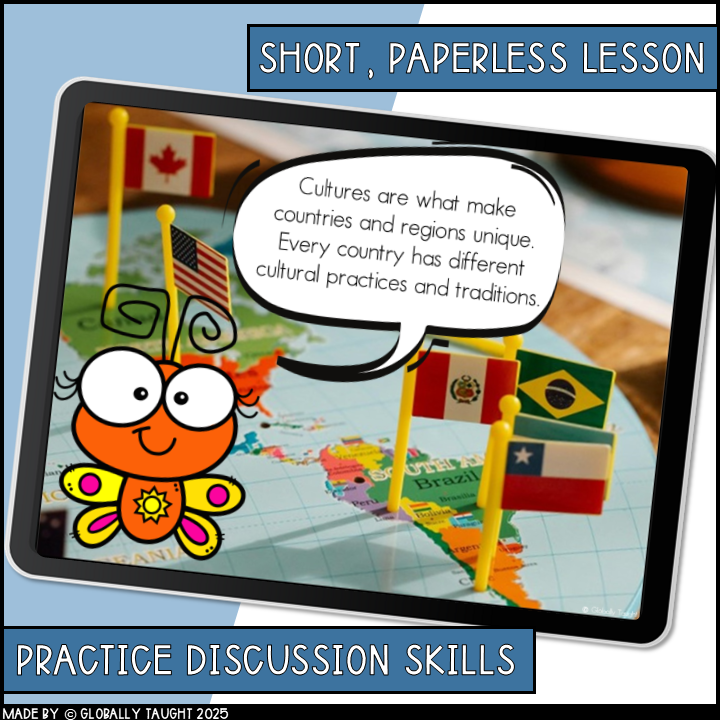
Yes. Students examine how geography, traditions, language, and history influence cultures around the world.
Q: Can this unit be used in multicultural education?
Yes. The lessons support multicultural learning, global education, and inclusive classroom discussions.
Before You Purchase
This is a digital download. No physical product will be shipped.
The resource is provided as a ZIP file containing the unit materials. Please make sure your device can open ZIP files and the included file formats before purchasing.
This resource is not editable unless otherwise noted.
Your purchase includes a single-teacher, single-classroom license. Please purchase additional licenses if you intend to share the resource with other teachers.
You will be able to access your purchase through your Globally Taught account and receive future updates.
Please preview the resource before purchasing to make sure it is a good fit for your students and teaching needs.
Quick Product Details
Grade: 3rd-5th
Pages: 100 Pages | 100 Slides
Teaching Duration: 2 weeks
Answer Key: Yes with rubric
Format: ZIP file with PDFs and PowerPoint slides
Standards Alignment: Included