
5 Ways to Integrate Social Studies and ELA in Elementary Classrooms

Social studies and English Language Arts (ELA) integration combines reading, writing, speaking, and critical thinking with history, geography, economics, and civics instruction. In upper elementary classrooms, integrating social studies and ELA helps teachers build content knowledge while meeting literacy standards through nonfiction reading, discussion, and writing activities.
Elementary teachers are constantly balancing limited instructional time with a growing list of standards to cover. When done intentionally, this approach allows students to build literacy skills while learning about interesting social studies topics. Reading and writing about real historical and cultural topics helps students build background knowledge, improve comprehension, and engage more deeply with nonfiction texts.
Below are five practical ways to combine social studies and ELA in elementary classrooms.
1. Use Informational Texts to Teach Social Studies Content
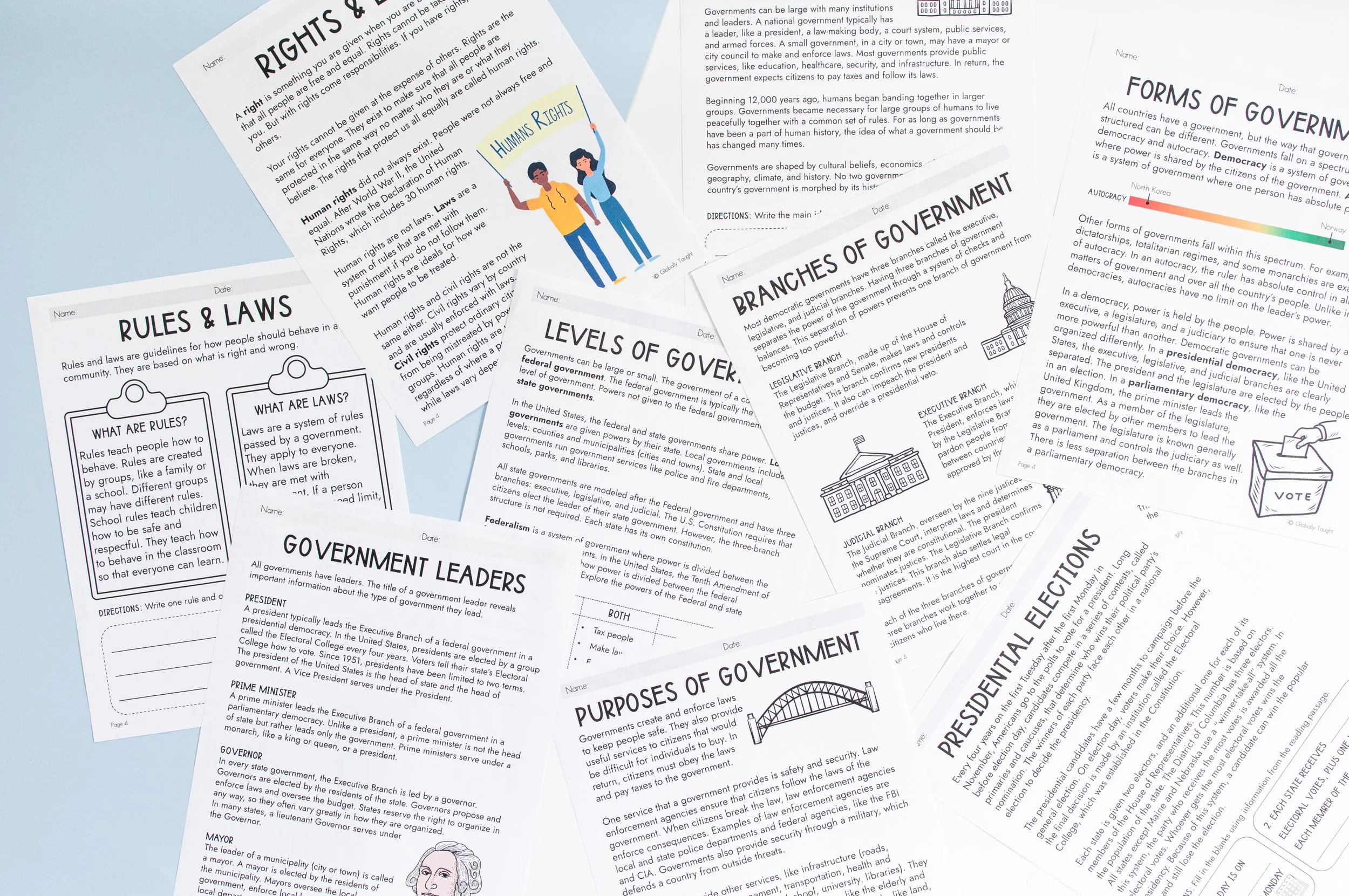
A sampling of reading passages from Globally Taught’s Government Unit
Social studies is naturally rich with informational texts. Instead of teaching reading strategies with unrelated passages, use texts connected to your social studies standards.
Students can:
Identify the main idea in a passage about the purposes of government
Analyze captions and maps in nonfiction geography reading passages
Compare perspectives in historical accounts
Learn new vocabulary related to culture, government, or geography
This approach helps students practice literacy skills while developing content knowledge about the world around them.
Example activities include:
Read a nonfiction article about holidays around the world
Annotate a short biography of a historical figure
Analyze maps, timelines, and primary source images
Practicing these strategies with real-world topics prepares students for future learning and grounds their education in something practical and thematic.
2. Connect Writing Assignments to Social Studies Topics
Social studies provides authentic opportunities for writing. Instead of isolated writing prompts, students can write about meaningful topics related to history, geography, economics, government, and culture.
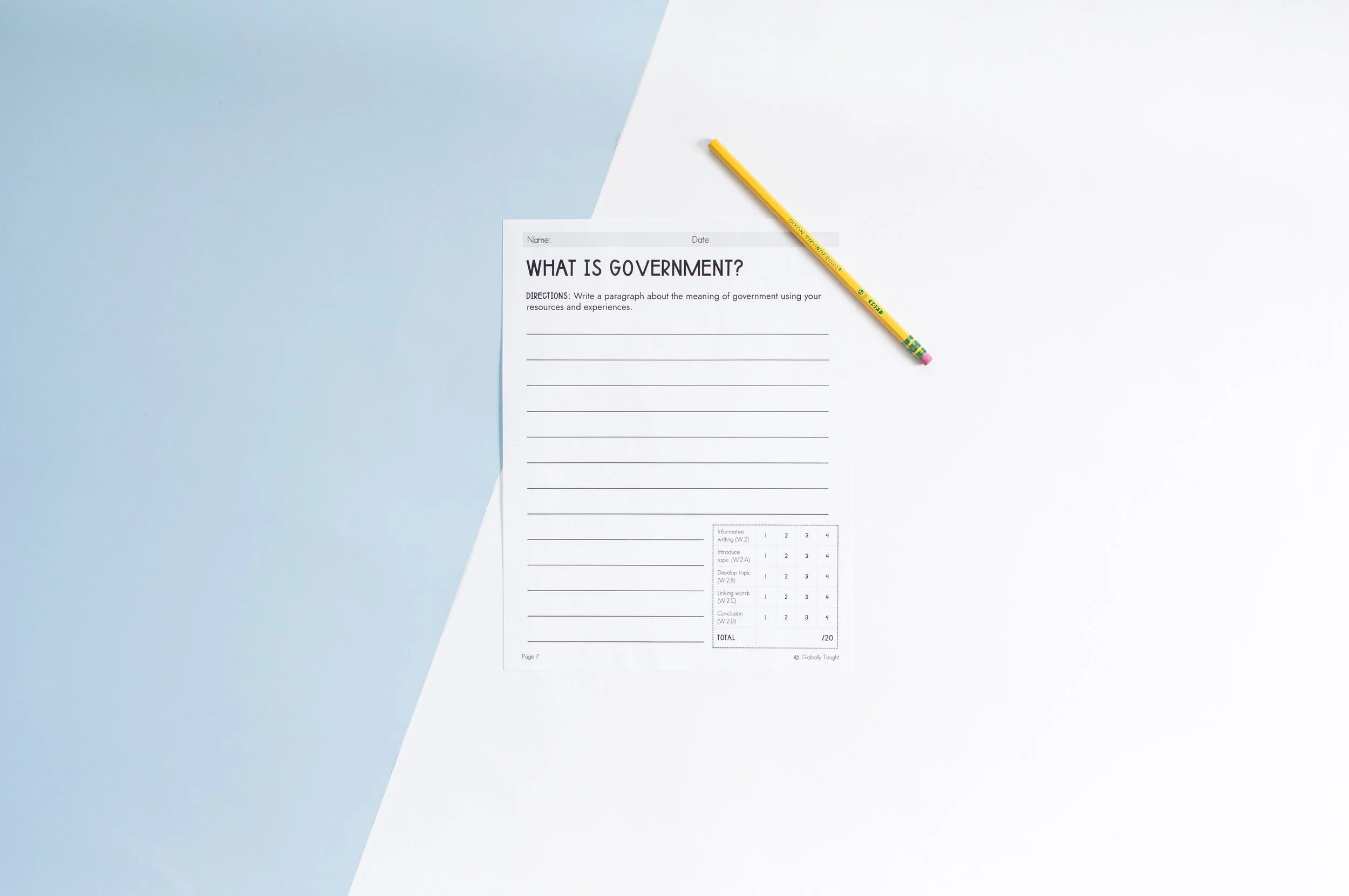
Try incorporating:
Opinion writing: Should explorers be considered heroes or villains?
Informational writing: Explain how geography affects where people live.
Narrative writing: Write a diary entry from the perspective of a historical figure.
Research writing: Investigate traditions from different countries.
These activities help students practice Common Core writing standards while strengthening their understanding of social studies concepts.
Our Government Unit and Holidays Around the World Unit include a variety of writing prompts that cover Common Core writing standards, and include easy-to-grade rubrics.
3. Explore Global Holidays Through Reading and Writing
Holidays are a great way to combine culture, geography, and literacy skills.
Students can:
Read informational texts about celebrations around the world
Compare traditions across cultures
Write informative paragraphs about the meaning of different holidays
Create descriptive writing about a celebration they learned about
Our Holidays Around the World Unit is designed to support this type of integration. The lessons combine social studies exploration with Common Core aligned writing activities, giving students opportunities to practice informative, narrative, and opinion writing while learning about global holiday traditions.
This approach allows teachers to cover literacy standards while expanding students’ global awareness.
4. Use Inquiry and Discussion to Build Critical Thinking
Social studies naturally encourages questioning and analysis. Pairing this with literacy strategies helps students think more deeply about what they read.
Try routines like:
See–Think–Wonder with historical images
Analyzing primary sources or photographs
Comparing two accounts of the same event
Asking students to support answers with text evidence
These strategies encourage students to read carefully, ask questions, and construct evidence-based explanations. All of these are skills that support both literacy and social studies education.
5. Create Cross-Curricular Projects
Project-based learning makes integration even more meaningful.
Examples include:
Researching a country and writing an informational report
Creating a travel brochure describing geographic features
Writing letters from the perspective of historical figures
Producing a class book about global holidays
Projects like these combine reading, writing, research, and social studies knowledge into one engaging learning experience.
When students use literacy skills to explore real topics, they gain a deeper understanding of both subjects.
Why Integration Works
Social studies is sometimes reduced in elementary school schedules due to pressure to prioritize reading instruction. Integrating the two subjects ensures students continue building social studies knowledge, which includes critical knowledge and skills for success in the twenty-first century, while strengthening literacy skills.
When students read, write, and think about meaningful content, they develop stronger comprehension and a stronger connection to the world.
Final Thoughts
Integrating social studies and ELA doesn’t mean sacrificing one subject for another. Instead, it creates richer learning experiences where students build literacy skills while exploring history, geography, and culture.
By using informational texts, connecting writing to real-world topics, and incorporating engaging units like our Holidays Around the World Unit, teachers can make the most of their instructional time while helping students become curious, informed learners.